Best Books for SSC CGL Preparation 2026: Subject-wise List and How to Use Them
Updated 10 October 2026 · Facts checked against the sources listed at the end
There is no official SSC CGL book list. The Staff Selection Commission publishes a syllabus, not a reading list, so every book below is a popular choice among teachers and past candidates, not an endorsed one. All of them are real titles listed on publisher, bookstore or library sites.
Where the exam stands on 10 October 2026: the CGL 2026 Tier 1 exam is being held from 30 September to 30 October 2026, and the official notice puts Tier 2 tentatively in December 2026. If you have finished Tier 1, shift your time to Tier 2 maths, English, the computer test and previous-year papers.
A book only helps if you finish it and practise from it. Pick one main book per subject, then move to previous-year papers as early as you can.
What your SSC CGL books need to cover
Match your books to the CGL 2026 scheme of examination. Tier 1 screens candidates, and the final merit list is prepared from Tier 2 marks only.
| Stage | Sections | Questions, marks and time |
|---|---|---|
| Tier 1 | Reasoning, General Awareness, Quantitative Aptitude, English Comprehension | 25 questions and 50 marks per section; 1 hour with a 15-minute timer per section; 0.50 marks lost per wrong answer |
| Tier 2, Paper I, Section I | Mathematical Abilities, Reasoning and General Intelligence | 30 + 30 questions at 3 marks each (180 marks); 1 hour |
| Tier 2, Paper I, Section II | English Language and Comprehension, General Awareness | 45 + 25 questions at 3 marks each (210 marks); 1 hour |
| Tier 2, Paper I, Section III | Computer Knowledge Test (qualifying) | 20 questions, 60 marks; 15 minutes |
| Tier 2, Paper I, Section IV | Data Entry Speed Test (qualifying) | One typing passage of about 2,000 key depressions in 15 minutes |
| Tier 2, Paper II | Statistics (only for JSO and Statistical Investigator Grade II) | 100 questions, 200 marks; 2 hours |
| Tier 2, Paper III | General Studies: Finance and Economics (only for Assistant Audit Officer and Assistant Accounts Officer) | 100 questions, 200 marks; 2 hours |
In Tier 2 Paper I, a wrong answer costs 1 mark, so careless guessing gets expensive. Questions are set in English and Hindi, except the English section. If you prefer Hindi, check the publisher's listing for a Hindi edition before you buy.
Best books for SSC CGL maths (Quantitative Aptitude)
The notice sets Tier 1 maths at 10th standard level, so the challenge is speed and accuracy rather than new theory. Tier 2 uses the same topics, adds a short statistics and probability unit, and gives more marks per question.
| Book | Author / publisher | Use it for |
|---|---|---|
| Quantitative Aptitude for Competitive Examinations | R.S. Aggarwal / S. Chand | Learning each arithmetic topic from scratch, with plenty of graded practice |
| Fast Track Objective Arithmetic | Rajesh Verma / Arihant | Shortcut methods and exam-style arithmetic practice |
| Magical Book on Quicker Maths | M. Tyra / BSC Publishing | Faster calculation: multiplication, squares, approximation |
| NCERT Mathematics textbooks, Classes 9 and 10 | NCERT (free at ncert.nic.in) | School basics of algebra, geometry, mensuration and trigonometry |
| SSC Mathematics Chapterwise & Typewise Solved Papers | Kiran Prakashan | Past SSC maths questions sorted by chapter, so you see how each topic is asked |
How to combine them: learn a topic from R.S. Aggarwal or NCERT, pick up the shortcuts from Fast Track, then solve that topic's past questions from the Kiran collection. Use Quicker Maths for a short daily calculation drill instead of reading it cover to cover.
If school geometry and trigonometry feel shaky, rework the NCERT Class 9 and 10 chapters first. SSC questions on triangles, circles and heights and distances assume those basics.
Best books for SSC CGL reasoning
| Book | Author / publisher | Use it for |
|---|---|---|
| A Modern Approach to Verbal & Non-Verbal Reasoning | R.S. Aggarwal / S. Chand | Full coverage of verbal and non-verbal types, including figure-based questions |
| A New Approach to Reasoning: Verbal, Non-Verbal & Analytical | B.S. Sijwali and Indu Sijwali / Arihant | A second set of worked examples and practice for each question type |
| Analytical Reasoning | M.K. Pandey / BSC Publishing | Optional extra practice in logic: statements, assumptions, syllogisms, data sufficiency |
The CGL reasoning list is mostly verbal and non-verbal: analogies, classification, series, coding-decoding, Venn diagrams, paper folding and punched holes, embedded figures and similar types. One of the first two books is enough for most students. M.K. Pandey's book concentrates on analytical and logical reasoning, which is only one part of the CGL list, so keep it for extra practice.
Best books for SSC CGL English
| Book | Author / publisher | Use it for |
|---|---|---|
| Objective General English | S.P. Bakshi / Arihant | Grammar rules, vocabulary and objective practice in one book |
| English for General Competitions (Vol. 1 and Vol. 2) | Neetu Singh / KD Publication | Rule-by-rule grammar with SSC-style practice |
| High School English Grammar and Composition | Wren & Martin / S. Chand | A reference for grammar doubts, not a cover-to-cover read |
| Word Power Made Easy | Norman Lewis / Penguin | Building vocabulary through word roots |
English is the biggest single part of Tier 2 Paper I, with 45 questions. The syllabus names error spotting, fill in the blanks, synonyms and antonyms, spellings, idioms and phrases, one-word substitution, sentence improvement, active and passive voice, direct and indirect speech, rearranging sentences, cloze passages and comprehension.
The notice also says at least one comprehension passage will be a simple one from a book or story, while the others will be on current affairs, taken from a report or an editorial. Reading one newspaper editorial a day trains you for those passages better than any book.
Best books for SSC CGL General Awareness
| Resource | Publisher | Use it for |
|---|---|---|
| Lucent's General Knowledge | Lucent Publication | Compact static GK: history, geography, polity, economy and science |
| NCERT textbooks for history, geography, political science and science | NCERT (free at ncert.nic.in) | Clear explanations behind the facts, especially in science and polity |
| A monthly current affairs compilation and a daily newspaper | Any reputable source | Current events, which no book printed once a year can keep up with |
The syllabus asks about the world around you, current events, everyday science, and India and its neighbours: history, culture, geography, the economy, general policy and scientific research. Lucent covers the static part briefly; NCERT books explain it properly. Buy the latest Lucent edition, because older prints can carry outdated facts such as old lists of states and union territories.
Books for Tier 2 only: computer, statistics and finance
Computer Knowledge Test
This test is qualifying, but posts that need computer proficiency, such as Assistant Section Officer in CSS and Inspector posts in CBIC, get a higher cut-off. The syllabus covers computer basics, Windows and MS Office, the internet and e-mail, and networking and cyber security. Arihant's Computer Awareness Objective Question Bank for General Competitions (by Arihant Experts) gives chapter-wise objective practice on these areas.
Statistics (Paper II)
Only candidates shortlisted for Junior Statistical Officer and Statistical Investigator Grade II take this paper. Its syllabus runs from data presentation and averages through probability, distributions, sampling and inference to analysis of variance, time series and index numbers. Fundamentals of Mathematical Statistics by S.C. Gupta and V.K. Kapoor (Sultan Chand & Sons) is a standard text for the probability, distribution and correlation-regression units; check its contents against the remaining units in the notice and fill gaps from your graduation notes.
General Studies: Finance and Economics (Paper III)
Only for Assistant Audit Officer and Assistant Accounts Officer candidates. Part A, Finance and Accounts, carries 80 marks and Part B, Economics and Governance, carries 120 marks. Use your commerce or economics graduation textbooks for accounting basics, and work through the topic list in the notice line by line, since it names specific items such as the role of the Comptroller and Auditor General and the Finance Commission.
Why previous-year papers matter more than any book
Books teach methods. Past papers show you what SSC actually asks, how it words questions and which topics keep returning. They also train you to work against the sectional timers, which no textbook can do.
- Start topic-wise: after each chapter, solve that chapter's past questions from a chapter-wise collection.
- Move to full papers: once most topics are done, attempt complete past papers in one sitting with the same section timings as the real exam.
- Use official keys: SSC places tentative answer keys on its website after each exam and uploads the final keys after the result.
- Keep an error log: write down every question you got wrong and why, and revise the log every week.
A simple way to use these books
- Choose one main book per subject. Two books for the same subject often means neither gets finished.
- Read a chapter, work through its solved examples, then its exercises. Mark every question you get wrong.
- Solve that chapter's previous-year questions in the same week.
- Write a one-page summary for each chapter for final revision.
- Once most of the syllabus is done, add a timed mock test every week, and more as the exam gets closer.
- In the final weeks, stop adding new books. Revise your summaries, your error log and past papers.
You do not have to study alone. On Sikhami you can read free notes, play quiz battles to test yourself on a topic, and join live study rooms to work through problems with other learners.
Check the edition before you buy: look for the latest year on the cover. For exam dates, pattern and syllabus, trust the notice on ssc.gov.in rather than a book jacket.
Frequently asked questions
Which is the best book for SSC CGL maths?
There is no single best book. Many students learn concepts from R.S. Aggarwal's Quantitative Aptitude for Competitive Examinations or NCERT Class 9 and 10 maths, practise shortcuts from Rajesh Verma's Fast Track Objective Arithmetic, and then solve chapter-wise past SSC questions. The past questions matter most.
Is Lucent enough for SSC CGL General Awareness?
Lucent's General Knowledge covers much of the static part in a compact way, but it cannot cover recent events. Add a monthly current affairs compilation and a daily newspaper, and use NCERT books where you need clearer basics, especially in science.
How many books do I need for SSC CGL?
One main book per subject plus a collection of previous-year papers is usually enough. Add a second book only for a subject you find hard, and only after finishing the first. Finishing and revising one book beats skimming several.
Do I need separate books for SSC CGL Tier 2?
For Paper I, your Tier 1 books still apply because the topics overlap, but practise harder questions and add a computer awareness book for the Computer Knowledge Test. Statistics (Paper II) and Finance and Economics (Paper III) need their own books, and only candidates shortlisted for those posts take them.
Are previous year papers enough for SSC CGL?
They are the most useful single resource, but they work best after you have learned the basics of each topic. Use a concept book first, then past papers topic by topic, then full timed papers and mock tests.
Notes on Sikhami for SSC exams
 SSC - Maths - Strategy & Practice Book - With Detailed Solutions - 1307 PagesBooks · English · Free
 SSC - Reasoning - Critical Reasoning Made Simple - 98 PagesBooks · English · Free
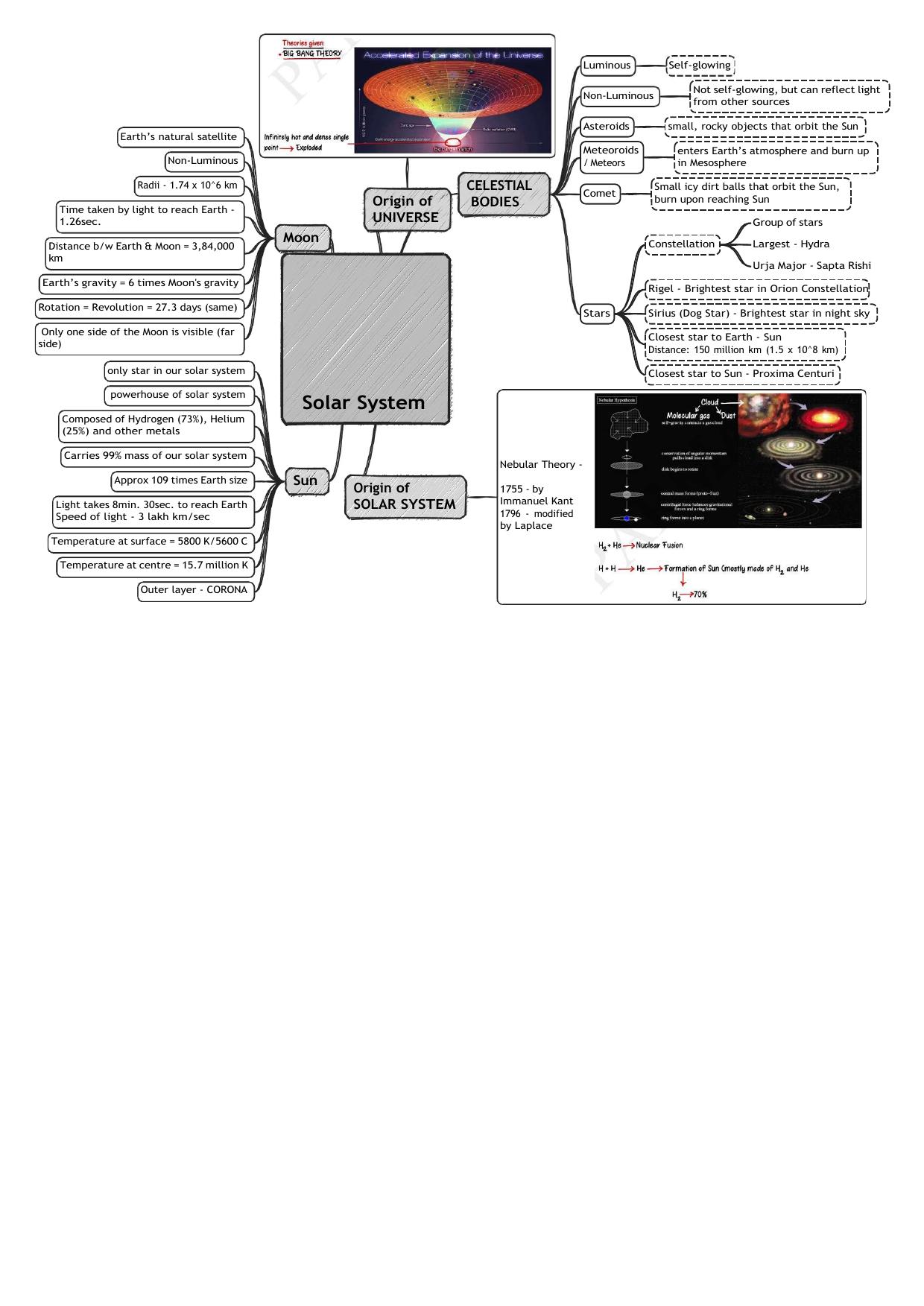 SSC - General Awareness - Geography Flow Charts - 22 PagesNotes · English · Free
 SSC - English Topic Wise - Apr 2022 - Tier 1 - 78 PagesBooks · English · Free
 SSC - Reasoning - Handwritten Notes - 286 PagesNotes · English · Free
 SSC - Maths - Circle Handwritten Formulas Notes - 15 PagesNotes · English · Free
Sources
Exam rules and dates change every cycle: confirm on the official notice before you apply.
- SSC: Combined Graduate Level Examination, 2026 notice (official PDF)
- SSC: Exam city and admission certificate information, CGL 2026 Tier-I (21.09.2026)
- S Chand Publishing: Quantitative Aptitude for Competitive Examinations, Dr. R.S. Aggarwal
- Flipkart: Fast Track Objective Arithmetic, Rajesh Verma (Arihant)
- AbeBooks: Magical Book on Quicker Maths, M. Tyra (BSC Publishing)
- NCERT: Textbooks
- Goodreads: Kiran's SSC Mathematics Chapterwise & Typewise Solved Papers
- S Chand Publishing: A Modern Approach to Verbal & Non-Verbal Reasoning, Dr. R.S. Aggarwal
- Exam With Arihant: A New Approach to Reasoning Verbal, Non-Verbal & Analytical
- Library catalogue: Analytical Reasoning, M.K. Pandey (BSC Publishing)
- Arihant Books: Objective General English, S.P. Bakshi
- Delhi Public Library catalogue: English for General Competitions Vol. 1, Neetu Singh
- S Chand Publishing: High School English Grammar and Composition, Wren & Martin
- Penguin India: Word Power Made Easy, Norman Lewis
- Flipkart: Lucent's General Knowledge
- Arihant Books: Computer Awareness Objective Question Bank for General Competitions
- AbeBooks: Fundamentals of Mathematical Statistics, S.C. Gupta and V.K. Kapoor
More exam guides
- SSC CGLSSC CGL Syllabus 2026: Exam Pattern and Full Tier 1 and Tier 2 Syllabus
- SSC CGLSSC CGL Cut Off: Previous Year Tier 1 Cut-offs (2021 to 2025) and CGL 2026 Status
- SSC CGLSSC CGL Salary 2026: Post-wise Pay Level, In-hand Salary per Month and Promotions
- SSC CGLSSC CGL Jobs List 2026: Every Post, Department, Pay Level and Vacancy
- SSC CGLSSC CGL Eligibility 2026: Age Limit, Qualification, Attempts and Height Rules
- SSC CGLSSC CGL Admit Card 2026: Download Steps, City Intimation Slip and What to Carry