SSC GD Syllabus 2026 and Exam Pattern: Topics, Marks, Negative Marking and Stages
Updated 10 October 2026 · Facts checked against the sources listed at the end
The SSC GD Constable exam begins with one computer-based examination (CBE): 80 multiple-choice questions of 2 marks each, so 160 marks in all, to be finished in 60 minutes. The paper has four parts of 20 questions each: General Intelligence and Reasoning, General Knowledge and General Awareness, Elementary Mathematics, and English or Hindi. Each wrong answer costs 0.25 marks, and the questions are set at matriculation (Class 10) level.
Everything on this page comes from the SSC GD 2026 notice, officially the Constable (GD) in CAPFs and SSF, and Rifleman (GD) in Assam Rifles Examination, 2026, which SSC published on 1 December 2025. It is the most recent GD notice on ssc.gov.in. SSC's exam calendar listed the GD 2027 notice for 30 September 2026, but it had not been published when we checked on 10 October 2026, so the 2026 scheme below is the latest official one until the new notice confirms or changes it.
SSC GD exam pattern 2026: scheme of the CBE
| Part | Subject | Questions | Marks |
|---|---|---|---|
| Part A | General Intelligence and Reasoning | 20 | 40 |
| Part B | General Knowledge and General Awareness | 20 | 40 |
| Part C | Elementary Mathematics | 20 | 40 |
| Part D | English/Hindi | 20 | 40 |
| Total | One objective paper, 60 minutes for all four parts | 80 | 160 |
The notice gives one 60-minute duration for the whole paper rather than a separate time for each part. On average that is 45 seconds per question, which is why speed matters as much as knowledge in this exam.
| Rule | What the notice says |
|---|---|
| Question type | Objective multiple choice |
| Level | Matriculation (Class 10) |
| Negative marking | 0.25 marks deducted for each wrong answer |
| Languages | English, Hindi and 13 regional languages |
| Calculator | Not allowed, nor any other electronic gadget |
| Scoring | Marks are normalised as per SSC's notice of 2 June 2025; NCC bonus marks are then added for merit |
| Re-checking | No re-evaluation or re-checking of scores |
| Answer key challenge | Online only, Rs 50 per question challenged |
| Practice | A mock test is available in the Candidate's Corner on ssc.gov.in |
A right answer earns 2 marks and a wrong one loses 0.25, so a wrong answer costs one-eighth of what a right one earns. Leaving a question blank costs nothing.
Has the SSC GD exam pattern changed from last year?
No. The GD 2025 notice, published on 5 September 2024, had exactly the same scheme: 80 questions of 2 marks, four parts of 20 questions, 60 minutes, 0.25 negative marking, the same 15 languages and the same 30, 25 and 20 per cent minimum marks. So any good preparation material built on the last two cycles still fits. Only the next notice can tell whether 2027 keeps it.
Minimum qualifying marks and NCC bonus marks
Before merit even comes in, you must cross a minimum score in the CBE to be considered for the physical tests. NCC bonus marks are not counted for this minimum.
| Category | Minimum | Out of 160 marks |
|---|---|---|
| UR | 30% | 48 |
| OBC and EWS | 25% | 40 |
| All other categories | 20% | 32 |
Crossing the minimum does not mean you are through. SSC shortlists men and women separately, state-wise, area-wise and category-wise, by merit, and calls about 8 times the number of vacancies to the PET and PST. The cut-off for your state, category and gender is set by this merit, so aim well above the minimum rather than at it.
| Certificate | Bonus | In marks |
|---|---|---|
| NCC C | 5% of maximum marks | 8 |
| NCC B | 3% of maximum marks | 4.8 |
| NCC A | 2% of maximum marks | 3.2 |
The bonus is given only if you claimed it in the application form, and your certificate must have been issued on or before 1 January 2026 for the 2026 cycle. It is added provisionally and withdrawn if you cannot show the original at document verification. Ex-servicemen do not get this bonus.
SSC GD syllabus 2026: part-wise topics
The notice calls its topic list an indicative syllabus. It does not give any topic-wise weightage or marks per topic, so treat the weightage charts found online as guesses, not SSC rules. Here is what each part covers, in the notice's own topic names.
Part A: General Intelligence and Reasoning (20 questions)
This part checks analytical aptitude and how well you notice and tell apart patterns. The notice says the questions will be mainly non-verbal.
- Analogies
- Similarities and differences
- Spatial visualisation and spatial orientation
- Visual memory
- Discrimination and observation
- Relationship concepts
- Arithmetical reasoning
- Figural classification
- Arithmetic number series and non-verbal series
- Coding and decoding
Part B: General Knowledge and General Awareness (20 questions)
This part tests your awareness of the world around you, at the level any educated person is expected to have. The notice says it will not need special study of any one subject.
- Current events
- Everyday observations and their scientific side (general science)
- India and its neighbouring countries, especially sports, history, culture and geography
- Economic scene
- General polity and the Indian Constitution
- Scientific research
Part C: Elementary Mathematics (20 questions)
- Number systems
- Computation of whole numbers, decimals and fractions
- Relationships between numbers
- Fundamental arithmetical operations
- Percentages
- Ratio and proportion
- Averages
- Interest
- Profit and loss
- Discount
- Mensuration
- Time and distance
- Time and work
The notice also prints a topic called Ratio and Time in this list. We have kept it out of the list above because it reads like a printing slip, but ratio, time and distance and time and work are all covered anyway.
Part D: English or Hindi (20 questions)
This part tests whether you can understand basic English or Hindi and follow a simple passage. The notice does not list sub-topics for it, so prepare the basics of grammar, vocabulary and reading comprehension in the language you are strongest in.
SSC GD syllabus in Hindi: which languages can you write the exam in?
The syllabus is the same whatever language you choose. The SSC GD 2026 CBE was offered in English, Hindi and 13 regional languages: Assamese, Bengali, Gujarati, Kannada, Konkani, Malayalam, Manipuri, Marathi, Odia, Punjabi, Tamil, Telugu and Urdu.
SSC also posted a Hindi version of the GD 2026 notice on ssc.gov.in in December 2025, so you can read the official syllabus in Hindi. If the Hindi and English versions ever differ, the notice says the English version prevails. Part D is itself a test of basic English or Hindi, so it is answered in one of those two languages even if you take the rest of the paper in a regional language such as Marathi or Tamil.
After the 2026 exam, SSC let candidates view questions in Hindi and English in the answer key module, but challenges could be raised only in the language the candidate had chosen for the exam.
What comes after the CBE: PET, PST, medical and documents
| Stage | Run by | Who is called | What happens |
|---|---|---|---|
| PET and PST | CAPFs (admit cards on crpf.gov.in) | About 8 times the vacancies, by CBE merit, state, area, category and gender | Race first, then height, chest and weight measurement; pass or fail |
| DME and DV | CAPF medical boards | About 2 times the vacancies, from those who pass PET and PST | Detailed medical examination and checking of original documents such as domicile, caste and NCC certificates |
| Final result | SSC | Candidates fit in every stage | Merit on normalised CBE marks plus NCC bonus; force given by merit and your force preferences |
The physical tests and the medical are qualifying only. Your rank, and therefore which force you get, depends on the CBE score alone. Every applicant has to rank all seven forces in the application form (BSF, CISF, CRPF, SSB, ITBP, Assam Rifles and SSF), and the order cannot be changed later.
Because vacancies are fixed state by state, the domicile state and district you enter in the application decide which vacancies you compete for. At document verification you must produce a domicile certificate of that same state; a mismatch cancels the candidature, and the state cannot be changed at that stage. Fill this part of the form with great care.
Ex-servicemen do not run the race and are exempt from PST, but they are still measured for the record and must pass the medical. For every height, chest, weight and running standard, with all category relaxations, see our SSC GD physical test guide.
How SSC breaks a tie
If two candidates have the same CBE score including NCC bonus, the 2026 notice applies these checks one after another until the tie is broken:
- Higher marks in Part A (Reasoning)
- Higher marks in Part B (General Knowledge and General Awareness)
- Higher marks in Part C (Elementary Mathematics)
- The older candidate ranks higher
- Alphabetical order of names
So a strong reasoning score is the first thing that separates candidates with equal totals.
SSC GD 2026 timeline and the 2027 cycle
| Event | Date |
|---|---|
| Notice published | 1 December 2025 |
| Online applications | 1 to 31 December 2025 (fee till 1 January 2026) |
| Correction window | 10 to 13 January 2026, after being rescheduled |
| CBE | Planned from 23 February 2026 but deferred; finally held from 27 April to 31 May 2026 |
| Tentative answer keys | Released 15 June 2026; challenges till 20 June 2026 |
| CBE result | Not on ssc.gov.in when we checked on 10 October 2026 |
| GD 2027 notice | Listed in SSC's calendar for 30 September 2026 with applications till 31 October 2026; not published as of 10 October 2026 |
For the 2026 cycle you had to be 18 to 23 years old on 1 January 2026, with 5 extra years for SC and ST and 3 for OBC, and to have passed Class 10 by that date. The fee was Rs 100, with women, SC, ST and eligible ex-servicemen exempt. Persons with disabilities cannot apply for this exam. Expect the 2027 notice to move these dates forward, and check it before you apply.
How to prepare for the SSC GD CBE
- Take the official mock test on ssc.gov.in first, so the screen, the question palette and the timer feel familiar on exam day.
- Practise in sets of 80 questions in 60 minutes. Speed comes from doing many short, timed sets, not from reading theory.
- For reasoning, focus on non-verbal questions such as figure series, classification and spatial questions, since the notice says this part is mainly non-verbal.
- For maths, master Class 10 arithmetic: percentages, ratio, averages, interest, profit and loss, time and work, and mensuration. Learn shortcuts for calculation, as there is no calculator.
- For general awareness, combine current events with static topics on India and its neighbours. Our list of GK questions with answers is a good place to revise.
- Choose the language for Part D that you read fastest, and practise short comprehension passages in it.
- Start running early. The PET is pass or fail, and a high CBE score is wasted if you cannot finish the race in time.
You can read free notes on Sikhami for each part, test your speed against other aspirants in quiz battles, and join a study room on Sikhami to keep a daily practice routine with people preparing for the same exam.
Frequently asked questions
What is the SSC GD exam pattern 2026?
The SSC GD 2026 CBE has 80 objective questions of 2 marks each, so 160 marks, in 60 minutes. There are four parts of 20 questions: Reasoning, General Knowledge and General Awareness, Elementary Mathematics, and English or Hindi. The level is Class 10.
Is there negative marking in the SSC GD exam?
Yes. As per the 2026 notice, 0.25 marks are deducted for each wrong answer. A correct answer earns 2 marks, and unanswered questions carry no penalty.
Can I give the SSC GD exam in Hindi?
Yes. The 2026 CBE was held in English, Hindi and 13 regional languages, and SSC published the notice in Hindi too. The syllabus is the same in every language, and Part D is a test of basic English or Hindi.
How many marks are needed to qualify in SSC GD?
The minimum is 30% for UR, 25% for OBC and EWS and 20% for other categories, which is 48, 40 and 32 marks out of 160. These are only minimums; actual cut-offs are set by merit for each state, category and gender, so plan to score well above them.
How many maths questions are there in SSC GD?
Part C, Elementary Mathematics, has 20 questions worth 40 marks. It covers Class 10 arithmetic such as number systems, percentages, ratio and proportion, averages, interest, profit and loss, discount, mensuration, time and distance, and time and work. Calculators are not allowed.
Will the SSC GD syllabus change for 2027?
SSC had not published the GD 2027 notice when we checked on 10 October 2026, although its calendar listed 30 September 2026. The syllabus and pattern for 2027 will be confirmed only in that notice on ssc.gov.in, so compare it with the 2026 scheme on this page when it comes out.
Notes on Sikhami for SSC exams
 SSC - Maths - Strategy & Practice Book - With Detailed Solutions - 1307 PagesBooks · English · Free
 SSC - Reasoning - Critical Reasoning Made Simple - 98 PagesBooks · English · Free
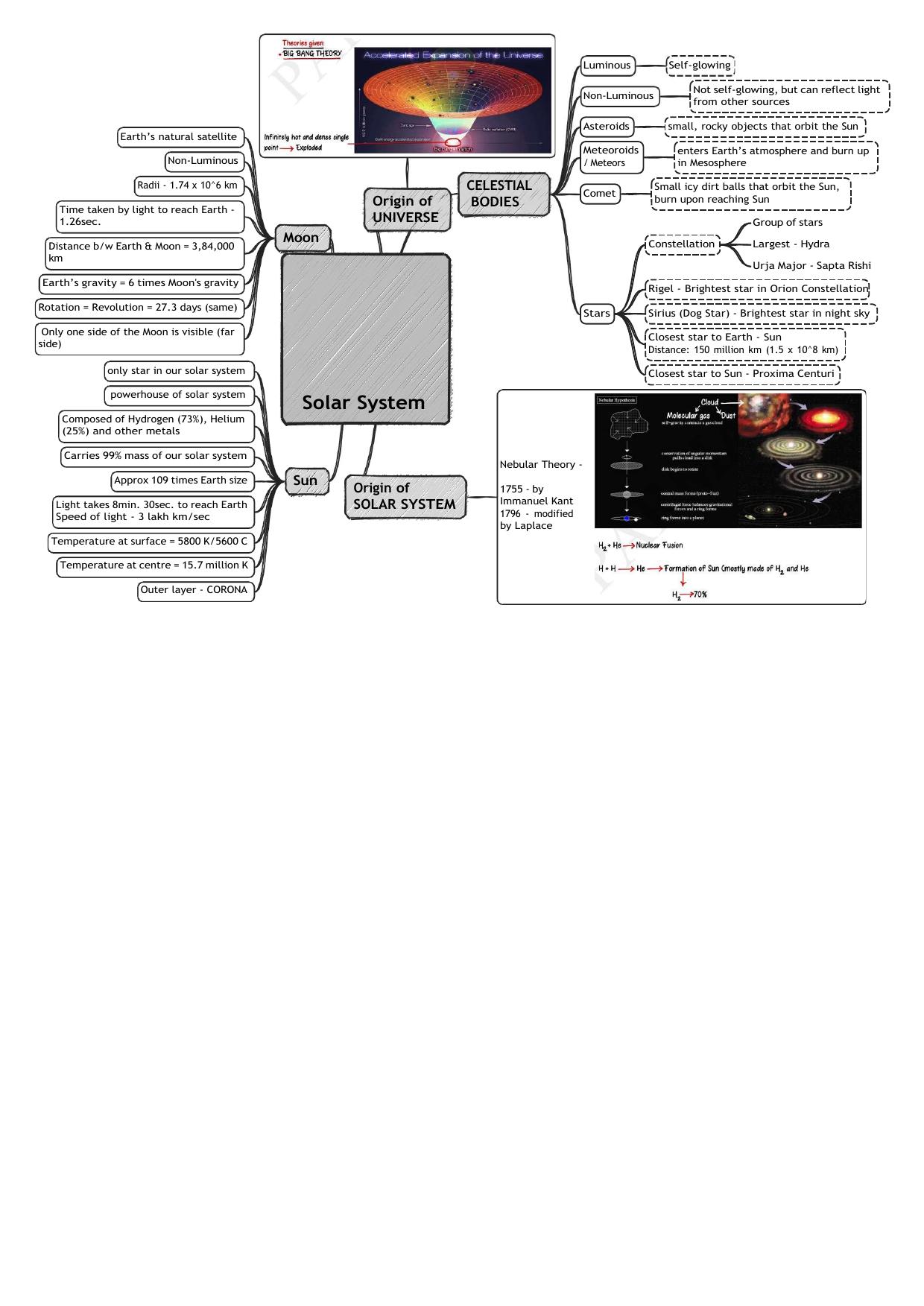 SSC - General Awareness - Geography Flow Charts - 22 PagesNotes · English · Free
 SSC - English Topic Wise - Apr 2022 - Tier 1 - 78 PagesBooks · English · Free
 SSC - Reasoning - Handwritten Notes - 286 PagesNotes · English · Free
 SSC - Maths - Circle Handwritten Formulas Notes - 15 PagesNotes · English · Free
Sources
Exam rules and dates change every cycle: confirm on the official notice before you apply.
- SSC: Notice of Constable (GD) in CAPFs and SSF, and Rifleman (GD) in Assam Rifles Examination, 2026 (English)
- SSC: Hindi notice of the Constable (GD) Examination, 2026
- SSC: Constable (GD) 2026 tentative answer keys notice, 15 June 2026
- SSC: Notice deferring the Constable (GD) 2026 CBE, 17 February 2026
- SSC: Rescheduled correction window for Constable (GD) 2026, 9 January 2026
- SSC: Notice of Constable (GD) Examination, 2025 (for comparison)
- SSC examination calendar
More exam guides
- SSC GDSSC GD Height, Chest and Running Time 2026: Physical Test (PST and PET) and Medical Standards
- SSC GDSSC GD Salary 2026: Pay Level 3, In-hand Salary per Month and Force-wise Posts
- General knowledgeGK Questions with Answers (2026) for SSC, Railway and Bank Exams
- SSC CGLSSC CGL Quantitative Aptitude Notes: Free Formulas and Worked Examples
- SSC CGLSSC CGL Syllabus 2026: Exam Pattern and Full Tier 1 and Tier 2 Syllabus
- SSC CHSLSSC CHSL Syllabus 2026: Tier 1 and Tier 2 Exam Pattern, Topics and Typing Test