SSC CGL Syllabus 2026: Exam Pattern and Full Tier 1 and Tier 2 Syllabus
Updated 10 October 2026 · Facts checked against the sources listed at the end
The SSC CGL syllabus has two computer-based stages. Tier 1 is a one-hour screening test with four sections (Reasoning, General Awareness, Quantitative Aptitude and English), 25 questions each, for 200 marks. Tier 2 Paper I, which every candidate takes, tests Mathematical Abilities, Reasoning, English, General Awareness, Computer Knowledge and data entry speed. Two extra papers are only for some posts: Paper II (Statistics) for Junior Statistical Officer and Statistical Investigator Grade II, and Paper III (General Studies: Finance and Economics) for Assistant Audit Officer and Assistant Accounts Officer.
Everything on this page follows the notice for the Combined Graduate Level Examination 2026, which SSC uploaded on ssc.gov.in on 21 May 2026. Where things stand on 10 October 2026: Tier 1 is being held from 30 September to 30 October 2026, and the notice gives December 2026 as the tentative month for Tier 2. Remember one rule while you plan: the final merit list comes from Tier 2 alone. Tier 1 marks only decide who moves ahead.
SSC CGL exam pattern 2026 at a glance
Here is the whole scheme on one screen. The detail for each stage follows below.
| Stage | Who takes it | Questions | Marks | Time | Wrong answer |
|---|---|---|---|---|---|
| Tier 1 | All applicants | 100 (4 sections x 25) | 200 | 1 hour, 15-minute timer per section | minus 0.50 |
| Tier 2, Paper I, Sections I and II | Everyone who clears Tier 1 | 130 | 390 | 2 hours (1 hour per section) | minus 1 |
| Tier 2, Paper I, Section III (Computer Knowledge) | Everyone who clears Tier 1 | 20 | 60, qualifying only | 15 minutes | minus 1 |
| Tier 2, Paper I, Section IV (Data Entry Speed Test) | Everyone, except candidates exempted from it | One typing task | Qualifying only | 15 minutes | Not applicable |
| Tier 2, Paper II (Statistics) | Only candidates shortlisted for JSO and Statistical Investigator Grade II | 100 | 200 | 2 hours | minus 0.50 |
| Tier 2, Paper III (General Studies: Finance and Economics) | Only candidates shortlisted for Assistant Audit Officer and Assistant Accounts Officer | 100 | 200 | 2 hours | minus 0.50 |
Candidates eligible for a scribe get extra time at every stage, as set out in the notice (for example, 20 minutes per Tier 1 section instead of 15). If that applies to you, read paras 7 and 13 of the notice for your exact timings.
SSC CGL Tier 1 exam pattern
| Section | Questions | Marks | Level of questions |
|---|---|---|---|
| A. General Intelligence and Reasoning | 25 | 50 | Graduation level |
| B. General Awareness | 25 | 50 | Graduation level |
| C. Quantitative Aptitude | 25 | 50 | 10th standard level |
| D. English Comprehension | 25 | 50 | Graduation level |
| Total | 100 | 200 | 1 hour, 15-minute sectional timer |
Each question carries 2 marks and a wrong answer costs 0.50 marks. The sectional timer means you cannot borrow time from one section for another: when the 15 minutes for Reasoning end, that section closes and the next one opens. Questions come in both English and Hindi, except in the English Comprehension section.
Tier 1 is a filter. SSC shortlists candidates category-wise from Tier 1 marks, with separate cut-offs for JSO and Statistical Investigator Grade II, for the audit and accounts officer posts, and for all other posts. Tier 1 marks are not added to the final score.
SSC CGL Tier 2 exam pattern: Paper I, Paper II and Paper III
Paper I is compulsory for every post and runs in two sessions on the same day. Session I lasts 2 hours and 15 minutes: Section I, then Section II, then Section III, each closing automatically when its time ends. After a break for re-registration, Session II is the 15-minute Data Entry Speed Test.
| Section | Subjects | Questions | Marks | Time |
|---|---|---|---|---|
| Section I | A: Mathematical Abilities (30), B: Reasoning and General Intelligence (30) | 60 | 180 (3 per question) | 1 hour, 30 minutes per subject |
| Section II | A: English Language and Comprehension (45), B: General Awareness (25) | 70 | 210 (3 per question) | 1 hour: 40 minutes for English, 20 for General Awareness |
| Section III | Computer Knowledge Test | 20 | 60 (3 per question), qualifying | 15 minutes |
| Section IV | Data Entry Speed Test | One task of about 2,000 key depressions | Qualifying | 15 minutes |
Negative marking is heavier in Tier 2: 1 mark per wrong answer in Sections I, II and III of Paper I, and 0.50 marks per wrong answer in Papers II and III. You must clear every section of Paper I separately, so a strong Maths score cannot rescue a weak English score.
Papers II and III are held in separate shifts or on separate days. Each has 100 questions worth 2 marks, for 200 marks in 2 hours. Paper III is split into Part A, Finance and Accounts (80 marks), and Part B, Economics and Governance (120 marks). The notice sets Paper I Maths at matriculation level, Paper I English at 10+2 level, and Papers II and III at graduation level.
Qualifying marks and how the final merit list is made
The notice fixes minimum qualifying marks for Tier 1, for Sections I, II and III of Paper I, and for Papers II and III. These are floors only. The marks that actually take you through are the category-wise cut-offs SSC sets after each exam.
| Category | Minimum marks: Tier 1, Paper I Sections I to III, Papers II and III | Maximum errors allowed in the Data Entry Speed Test |
|---|---|---|
| UR | 30% | 20% |
| OBC and EWS | 25% | 25% |
| All other categories | 20% | 30% |
Which marks count for merit depends on the post. For most posts it is the total of Sections I and II of Paper I, out of 390, provided you also clear Sections III and IV. For JSO and Statistical Investigator Grade II, Paper II is added to that total. For Assistant Audit Officer and Assistant Accounts Officer, Paper III is added.
Some posts need higher qualifying standards in the computer test or typing test, or both. The notice gives an open-ended list that includes Assistant Section Officer in CSS, MEA and AFHQ, Assistant in SFIO, GSI and IMD, the three CBIC Inspector posts, Executive Assistant in CBIC, and Postal and Sorting Assistant for higher standards in both. Tax Assistant in CBIC and CBDT and UDC or SSA in the Central Bureau of Narcotics need a higher typing standard. If you want one of these posts, treat Sections III and IV as serious papers, not formalities.
If an exam runs in several shifts, SSC normalises the scores using its procedure notified on 2 June 2025. The normalised scores are used for cut-offs and merit. Tier 1 cut-offs for past years are in our SSC CGL previous year cut-off guide.
SSC CGL Tier 1 syllabus, section by section
General Intelligence and Reasoning
SSC asks both verbal and non-verbal questions. The notice lists the topics in one long paragraph; grouped by type, they are:
| Type | Topics |
|---|---|
| Analogy | Semantic analogy, symbolic or number analogy, figural analogy |
| Classification | Semantic classification, symbolic or number classification, figural classification |
| Series | Semantic series, number series, figural series, arithmetic number series, non-verbal series |
| Coding and operations | Coding and decoding, numerical operations, symbolic operations, small and capital letters or numbers coding, decoding and classification |
| Logic | Statement and conclusion, syllogistic reasoning, drawing inferences, Venn diagrams, trends, problem solving, critical thinking, arithmetical reasoning |
| Figures and space | Space orientation, space visualisation, punched hole and pattern folding and unfolding, figural pattern folding and completion, embedded figures |
| Clerical checks | Indexing, address matching, date and city matching, classification of centre codes and roll numbers |
| Others | Word building, emotional intelligence, social intelligence, visual memory, observation, judgement and decision making |
General Awareness
The notice keeps this broad. It tests your awareness of the world around you and its use in society, current events, and the science behind everyday observation that an educated person should know. It specifically mentions India and its neighbouring countries in history, culture, geography, the economic scene, general policy and scientific research. SSC does not break General Awareness into a fixed topic list, so cover static GK and current affairs together.
Quantitative Aptitude
The Tier 1 maths list covers arithmetic (number system, percentage, ratio and proportion, square roots, averages, interest, profit and loss, discount, partnership, mixture and alligation, time and distance, time and work), basic algebra and surds, graphs of linear equations, triangle and circle geometry, mensuration of 2D figures and solids, basic trigonometry with heights and distances, and data charts (histogram, frequency polygon, bar diagram and pie chart). Questions are at 10th standard level. Our separate SSC CGL maths syllabus guide gives every topic in detail with a study order, so we do not repeat it here.
English Comprehension
For Tier 1 the notice says only that it tests your ability to understand correct English, basic comprehension and writing ability. In practice, prepare from the detailed Tier 2 English list below: it covers the same skills and will also carry you through Tier 2.
SSC CGL Tier 2 syllabus: Paper I
Mathematical Abilities
The Tier 2 maths syllabus has seven headings: number systems, fundamental arithmetical operations, algebra, geometry, mensuration, trigonometry, and statistics and probability. It is essentially the Tier 1 list plus one new area: mean, median, mode, standard deviation and simple probability. The maths syllabus guide covers each heading.
Reasoning and General Intelligence
The Tier 2 list is almost the same as Tier 1: analogies, classification and series (semantic, number and figural), coding and decoding, numerical and symbolic operations, trends, space orientation, Venn diagrams, drawing inferences, paper folding and punched holes, figure completion, embedded figures, critical thinking, problem solving, word building, emotional intelligence and social intelligence. It drops the clerical matching items and ends with other sub-topics, if any, so do not treat the list as closed.
SSC CGL English syllabus (Tier 2)
- Vocabulary: synonyms, antonyms, homonyms and their correct use, spellings and misspelt words, idioms and phrases, one word substitution
- Grammar and sentence structure: spot the error, fill in the blanks, improvement of sentences
- Voice and narration: active and passive voice, direct and indirect speech
- Rearrangement: shuffling of parts of a sentence, shuffling of sentences in a passage
- Passages: cloze passage and reading comprehension
For comprehension, the notice says three or more passages will be given. At least one should be a simple passage drawn from a book or story, and the others should be on current affairs, based on a report or an editorial. Reading one newspaper editorial a day is direct practice for this.
General Awareness
The Tier 2 description is the same as Tier 1: current events, everyday science, and India and its neighbours in history, culture, geography, economy, general policy and scientific research. The difference is depth and weight. Here there are 25 questions at 3 marks each, with a 1-mark penalty, so guessing costs more.
Computer Knowledge (Section III)
| Module | Topics |
|---|---|
| Computer basics | Organisation of a computer, CPU, input and output devices, computer memory and its organisation, backup devices, ports, Windows Explorer, keyboard shortcuts |
| Software | Windows operating system, basics of MS Word, MS Excel and PowerPoint |
| Internet and e-mail | Web browsing and searching, downloading and uploading, managing an e-mail account, e-banking |
| Networking and cyber security | Networking devices and protocols, security threats such as hacking, viruses, worms and Trojans, and preventive measures |
Data Entry Speed Test (Section IV)
You type a passage of about 2,000 key depressions in 15 minutes. It is compulsory for all posts but only qualifying, judged on errors. Detailed instructions come from SSC's regional offices. PwBD-OH candidates can seek exemption with the prescribed medical certificate, except for posts that need computer proficiency or a higher typing standard; Tax Assistant in CBDT is the one such post where the exemption still applies.
Paper II (Statistics) syllabus
Only candidates shortlisted for Junior Statistical Officer and Statistical Investigator Grade II take this paper. The notice lists twelve units at graduation level.
| Unit | What it covers |
|---|---|
| 1. Collection, classification and presentation of data | Primary and secondary data, methods of collection, tabulation, graphs and charts, frequency distributions and their diagrams |
| 2. Measures of central tendency | Mean, median, mode; quartiles, deciles and percentiles |
| 3. Measures of dispersion | Range, quartile deviation, mean deviation, standard deviation, relative measures |
| 4. Moments, skewness and kurtosis | Types of moments and their relationship, measures of skewness and kurtosis |
| 5. Correlation and regression | Scatter diagram, correlation coefficient, regression lines, Spearman's rank correlation, association of attributes, multiple and partial correlation (three variables) |
| 6. Probability theory | Definitions, conditional and compound probability, independent events, Bayes' theorem |
| 7. Random variables and distributions | Expectation, variance, higher moments; binomial, Poisson, normal and exponential distributions; joint distribution of two discrete variables |
| 8. Sampling theory | Population and sample, parameter and statistic, sampling and non-sampling errors, probability and non-probability sampling methods, sampling distributions, sample size |
| 9. Statistical inference | Point and interval estimation, properties of estimators, methods of estimation, hypothesis testing, Z, t, chi-square and F tests, confidence intervals |
| 10. Analysis of variance | One-way and two-way classified data |
| 11. Time series analysis | Components, trend, seasonal variation |
| 12. Index numbers | Construction problems, types and formulae, base shifting and splicing, cost of living index, uses |
Paper III (General Studies: Finance and Economics) syllabus
Only candidates shortlisted for Assistant Audit Officer and Assistant Accounts Officer take this paper. Commerce graduates will recognise most of Part A; Part B mixes microeconomics, the Indian economy and public finance.
| Part | Topics |
|---|---|
| Part A: Finance and Accounts (80 marks) | Nature, scope and limitations of financial accounting; basic concepts, conventions and GAAP; single and double entry; books of original entry; bank reconciliation; journal, ledgers and trial balance; rectification of errors; manufacturing, trading, profit and loss appropriation accounts and balance sheet; capital versus revenue expenditure; depreciation; valuation of inventories; accounts of non-profit organisations (receipts and payments, income and expenditure); bills of exchange; self-balancing ledgers |
| Part B: Economics and Governance (120 marks) | Comptroller and Auditor General (constitutional provisions, role); Finance Commission; basics of economics and microeconomics, production possibility curve; demand, supply and elasticities; consumer behaviour (Marshallian and indifference curve approaches); production and costs, law of variable proportions, returns to scale; market forms and price determination; Indian economy (sectors, national income, population, poverty and unemployment, infrastructure); economic reforms since 1991; money and banking (RBI, commercial banks, RRBs, payments banks, monetary and fiscal policy); budget, fiscal deficit and balance of payments; FRBM Act, 2003; role of information technology in governance |
Topic-wise weightage: what SSC actually says
The official scheme fixes questions and marks per section and per subject, and nothing below that. SSC does not publish how many questions come from each topic, such as geometry or idioms. Any topic-wise weightage chart you see online is someone's count from past papers, and the mix can shift from shift to shift. Use such counts loosely, and give every topic on the official list at least one round of practice.
SSC CGL syllabus PDF: use the official notice
You do not need a separate syllabus PDF. The CGL 2026 notice on ssc.gov.in is the official one, and the relevant part is short. In the 132-page PDF, the scheme of examination is in paras 13.8 and 13.9 (pages 25 to 30), the Tier 1 syllabus is in para 13.10 and the Tier 2 syllabus in para 13.11 (pages 30 to 36), and qualifying marks and merit rules are in para 16 (from page 41).
Download it from the notice board on ssc.gov.in and keep it with your study material. Check the same notice board before each tier for any corrigendum, because SSC announces changes there and nowhere else.
How to turn this syllabus into a study plan
- Prepare for Tier 2 from day one. Its Maths, Reasoning, English and General Awareness lists cover nearly everything in Tier 1, so one preparation serves both.
- Give English and General Awareness more time than their Tier 1 share suggests. In Tier 2, Section II carries 210 marks against 180 for Section I.
- Practise under sectional timers. A section closes when its time ends, so speed has to be built per section, not across the paper.
- Learn basic computer topics and practise typing early. Both are only qualifying, but failing either can cost you the selection whatever your other scores.
- If you are aiming for JSO, Statistical Investigator or the audit and accounts officer posts, start Paper II or Paper III alongside Paper I, not after Tier 1.
Sikhami has free notes on many of these topics, and its quiz battles are a quick way to test your speed on one section against other learners. If you study better with company, join a Sikhami study room or a club with other aspirants and keep a daily target together.
Frequently asked questions
What is the syllabus of SSC CGL 2026?
Tier 1 covers General Intelligence and Reasoning, General Awareness, Quantitative Aptitude and English Comprehension, 25 questions each. Tier 2 Paper I covers Mathematical Abilities, Reasoning, English, General Awareness, Computer Knowledge and a Data Entry Speed Test. Paper II (Statistics) and Paper III (Finance and Economics) apply only to candidates shortlisted for certain posts.
Is the SSC CGL Tier 2 syllabus different from Tier 1?
The core subjects are the same, but Tier 2 adds statistics and probability to maths, gives a detailed English list, and adds a Computer Knowledge Test and a Data Entry Speed Test. Questions carry 3 marks with a 1-mark penalty in Paper I. Tier 2 marks alone decide the final merit.
Is there negative marking in SSC CGL?
Yes. In Tier 1 each wrong answer costs 0.50 marks. In Tier 2 it is 1 mark per wrong answer in Sections I, II and III of Paper I, and 0.50 marks in Papers II and III.
Is the computer test compulsory in SSC CGL?
Yes. The Computer Knowledge Test and the Data Entry Speed Test in Tier 2 are compulsory for all posts but only qualifying, so their marks do not add to your merit. Some posts, such as Assistant Section Officer in CSS and the CBIC Inspector posts, need higher qualifying standards in them.
What are the minimum qualifying marks in SSC CGL?
As per the CGL 2026 notice, the minimum is 30% for UR, 25% for OBC and EWS, and 20% for all other categories, in Tier 1 and in each scored section of Tier 2. These are only floors; the real cut-offs, set after each exam, are often higher.
Where can I download the SSC CGL syllabus PDF?
Use the official CGL 2026 notice on the ssc.gov.in notice board. The scheme of examination is in paras 13.8 and 13.9, and the full syllabus is in paras 13.10 (Tier 1) and 13.11 (Tier 2).
Notes on Sikhami for SSC exams
 SSC - Maths - Strategy & Practice Book - With Detailed Solutions - 1307 PagesBooks · English · Free
 SSC - Reasoning - Critical Reasoning Made Simple - 98 PagesBooks · English · Free
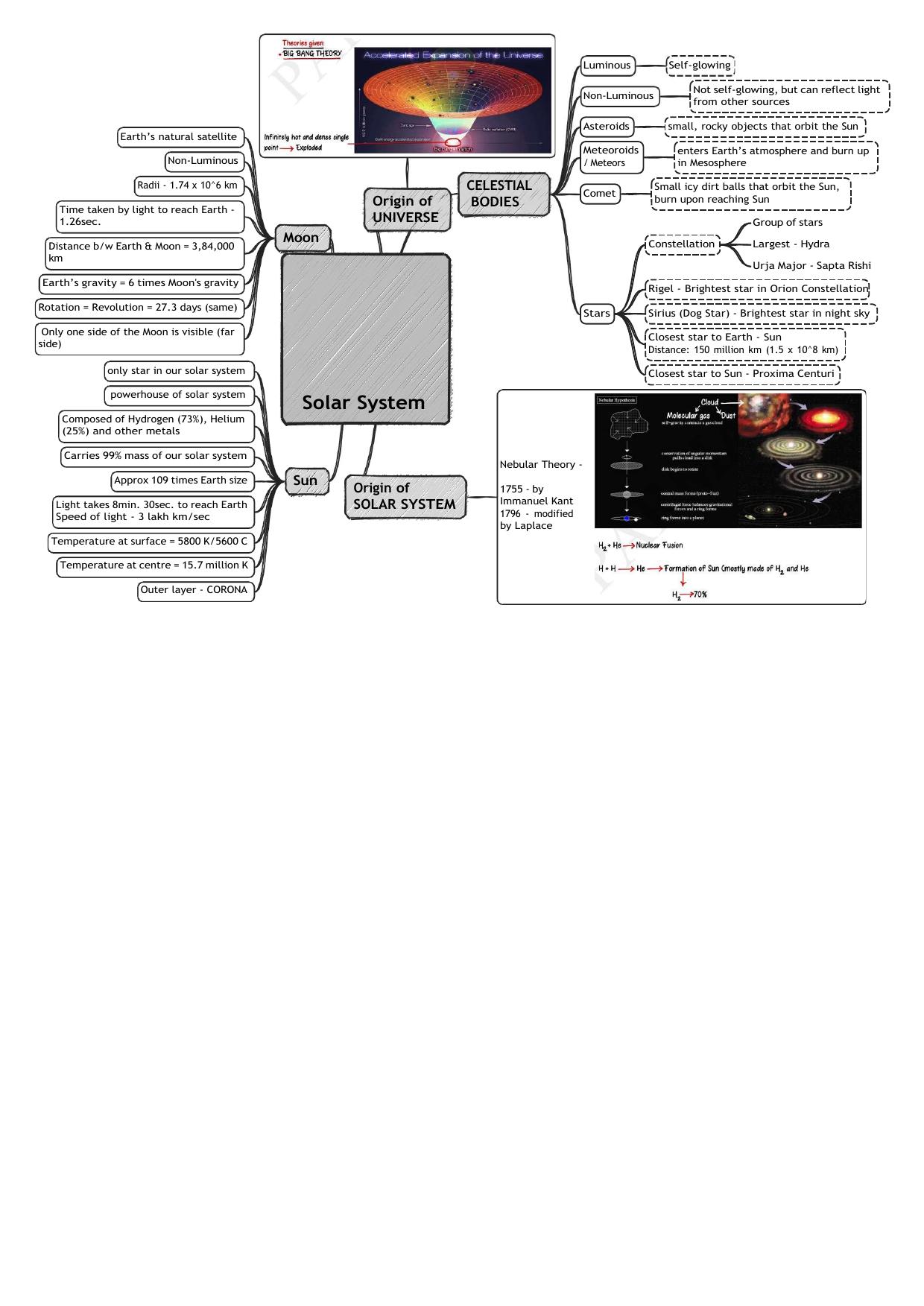 SSC - General Awareness - Geography Flow Charts - 22 PagesNotes · English · Free
 SSC - English Topic Wise - Apr 2022 - Tier 1 - 78 PagesBooks · English · Free
 SSC - Reasoning - Handwritten Notes - 286 PagesNotes · English · Free
 SSC - Maths - Circle Handwritten Formulas Notes - 15 PagesNotes · English · Free
Sources
Exam rules and dates change every cycle: confirm on the official notice before you apply.
More exam guides
- SSC CGLSSC CGL Salary 2026: Post-wise Pay Level, In-hand Salary per Month and Promotions
- SSC CGLSSC CGL Maths Syllabus 2026: Tier 1 and Tier 2 Topics, Marks and Study Order
- SSC CGLSSC CGL Cut Off: Previous Year Tier 1 Cut-offs (2021 to 2025) and CGL 2026 Status
- SSC CGLBest Books for SSC CGL Preparation 2026: Subject-wise List and How to Use Them
- SSC CGLSSC CGL Eligibility 2026: Age Limit, Qualification, Attempts and Height Rules
- SSC CGLSSC CGL Jobs List 2026: Every Post, Department, Pay Level and Vacancy