SSC JE Syllabus 2026: Exam Pattern, Civil, Electrical and Mechanical Topics, and Salary
Updated 10 October 2026 · Facts checked against the sources listed at the end
The SSC JE syllabus for 2026 has two papers. Paper 1 (200 questions, 200 marks, 2 hours) has 50 questions on General Intelligence and Reasoning, 50 on General Awareness and 100 from your engineering branch. Paper 2 (100 questions, 300 marks, 2 hours) comes entirely from your branch: civil, electrical or mechanical. This page follows the Staff Selection Commission's notice for the Junior Engineer Examination, 2026, uploaded on ssc.gov.in on 2 September 2026.
Two things are new this year. Paper 1 is now qualifying, so your final rank comes from Paper 2 alone, and the technical syllabus has been rewritten. As of 10 October 2026, SSC has proposed Paper 1 for 2 to 6 November 2026 (notice dated 1 October 2026), with Paper 2 tentatively in December 2026. The notice lists 1,748 tentative vacancies, and every post is in Pay Level 6.
SSC JE exam pattern 2026
| Paper | What it contains | Questions / marks | Time | Wrong answer |
|---|---|---|---|---|
| Paper 1 (qualifying) | General Intelligence and Reasoning: 50 questions. General Awareness: 50 questions. General Engineering in your branch: 100 questions | 200 / 200 | 2 hours | minus 0.25 |
| Paper 2 (decides merit) | General Engineering in your branch only | 100 / 300 | 2 hours | minus 1 |
Each Paper 1 question is worth 1 mark and each Paper 2 question is worth 3. Candidates eligible for a scribe get 2 hours 40 minutes for each paper. Both papers are computer-based, objective multiple-choice tests set in Hindi and English.
You choose your engineering part in the application form according to your qualification: Part A for Civil and Structural, Part B for Electrical, Part C for Mechanical. You answer the same part in both papers, and the notice says the choice cannot be changed later.
The minimum qualifying marks in both papers are 30% for UR candidates, 25% for OBC and EWS, and 20% for all other categories. Clearing that floor does not by itself take you to Paper 2. SSC shortlists for Paper 2 category-wise, by merit on normalised Paper 1 marks, so Paper 1 is qualifying only in the sense that its marks are not added to your final score.
Tools on the exam screen
The notice says the IS 456:2000 code tables and steam tables, where a question needs them, will be on screen under the Useful Data option, and a scientific calculator will be available on screen for the whole exam. Physical tables and calculators are not allowed in the exam hall.
Some posts are open to both electrical and mechanical candidates, who answer different papers. SSC therefore normalises the electrical and mechanical scores against each other, treating them as if they were different shifts.
What is new in the SSC JE 2026 notice
| Item | JE 2025 notice | JE 2026 notice |
|---|---|---|
| Role of Paper 1 | Counted with Paper 2 for final selection | Qualifying; final merit from Paper 2 only |
| Posts | JE Civil, Electrical, Mechanical, and Electrical and Mechanical | Adds JE (Telecom) in the Department of Telecommunications and Scientific Assistant in IMD |
| Technical syllabus | Older headings such as Building Materials, Concrete Technology and RCC Design | Rewritten, with headings such as Solid Mechanics, Structural Analysis, Power Electronics, Industrial Engineering and Metrology |
| Tentative vacancies | 1,340 | 1,748 |
| Questions, marks, time, negative marking | Paper 1: 200 / 200, 2 hours, minus 0.25. Paper 2: 100 / 300, 2 hours, minus 1 | Unchanged |
If you are working from a syllabus PDF or book made for 2025 or earlier, check it against the lists below. Several topics are named in the 2026 notice but not in the 2025 one, for example influence lines and plastic analysis in civil, thyristors and their firing circuits in electrical, and CNC machines, heat transfer and inventory control in mechanical. The notice still pitches civil, mechanical and electrical questions at roughly diploma level.
The notice does not give subject-wise weightage for either paper. Any chapter-wise question counts you see online are guesses based on past papers, not official figures.
Paper 1 syllabus: reasoning and general awareness
General Intelligence and Reasoning
Questions are both verbal and non-verbal. The notice names analogies, similarities and differences, space visualisation, problem solving, analysis, judgement, decision making, visual memory, discrimination, observation, relationship concepts, arithmetical reasoning, verbal and figure classification, and arithmetical number series. It also covers handling abstract ideas and symbols, and arithmetical computation.
General Awareness
This section tests awareness of your surroundings and their link with society, current events, and the science of everyday life. It includes India and its neighbouring countries, with history, culture, geography, the economic scene, general polity and scientific research. The notice says these questions should not need special study of any one discipline, which in practice means regular current affairs reading plus school-level static GK.
The third and largest section of Paper 1 is your engineering branch, with 100 questions drawn from the subject headings listed under each branch below.
SSC JE civil syllabus 2026
Paper 1, Part A (Civil Engineering): subject headings
Engineering Mechanics; Solid Mechanics; Structural Analysis; Construction Materials and Management; Estimating, Costing and Valuation; Concrete Structures; Steel Structures; Surveying; Soil Mechanics (Geotechnical Engineering); Fluid Mechanics and Hydraulics; Hydrology and Irrigation Engineering; Environmental Engineering; Transportation (Traffic) Engineering.
Paper 2, Part A (Civil and Structural Engineering): detailed topics
| Subject | Topics named in the notice |
|---|---|
| Engineering Mechanics | Systems of forces, free-body diagrams, equilibrium, internal forces in structures, friction, centre of mass, moment of inertia |
| Solid Mechanics | Shear force and bending moment in determinate beams, stress-strain relations, bending and shear stresses, uniform torsion, buckling of columns, combined direct and bending stresses |
| Structural Analysis | Determinate and indeterminate structures, superposition, trusses, arches, beams, cables and frames, slope deflection, moment distribution, influence lines |
| Construction Materials and Management | Bricks, stone, timber, steel, cement, aggregates, plastics, polymers, glass, concrete, mix design and testing of concrete; types of projects, project planning, PERT and CPM |
| Estimating, Costing and Valuation | Basics of estimating, cost estimates, rate analysis, detailed estimates, valuation |
| Concrete Structures | Working stress and limit state concepts; design of beams, slabs and columns; foundations and retaining walls; bond and development length |
| Steel Structures | Working stress and limit state concepts; bolted connections and welds; tension members, compression members and beams; plastic analysis of beams and frames |
| Surveying | Principles and errors, maps and coordinate systems, chain and compass, plane table, levelling and trigonometric levelling, traversing, triangulation, total station, tacheometry, theodolite, advanced equipment |
| Soil Mechanics | Phase relationships and index properties, soil classification, permeability, seepage and flow nets, uplift, piping, effective stress and quicksand, compaction, consolidation, shear strength and Mohr's circle |
| Fluid Mechanics and Hydraulics | Fluid properties and statics, continuity, momentum and energy equations, laminar and turbulent flow, pipes and pipe networks, lift and drag, forces on immersed bodies, flow measurement, specific energy, critical flow, hydraulic jump, uniform flow |
| Hydrology and Irrigation | Hydrologic cycle, precipitation, evaporation, infiltration, unit hydrographs, reservoir capacity, flood estimation and routing, well hydraulics, Darcy's law; irrigation methods, duty and delta, gravity dams, spillways, lined and unlined canals, cross-drainage works |
| Environmental Engineering | Water quality parameters and index, treatment processes, water demand and distribution; sewerage design, wastewater treatment, effluent standards, sludge disposal, reuse of treated sewage; air pollution and air quality index; municipal solid waste management |
| Transportation Engineering | Highway geometric design, railway track speed and cant, pavement materials and tests, bituminous mixes, flexible and rigid pavement design using IRC codes, traffic studies, accident studies, signs, signal design by Webster's method, intersections, highway capacity |
SSC JE electrical syllabus 2026
Paper 1, Part B (Electrical Engineering): subject headings
Fundamentals of Electrical Engineering; Magnetic Circuits; A.C. Fundamentals; Measurement and Measuring Instruments; Electrical Machines; Special Electric Machines and Synchronous Generators; Generation, Transmission and Distribution; Estimation and Costing; Utilization of Electrical Energy; Basic Electronics; Power Electronics.
Paper 2, Part B (Electrical Engineering): detailed topics
| Subject | Topics named in the notice |
|---|---|
| Fundamentals | Resistors, capacitors, inductors and batteries; voltage, current, power, energy and flux with their units; KCL, KVL, node and mesh analysis; Thevenin, Norton, superposition and maximum power transfer theorems |
| Magnetic Circuits | Flux, reluctance, self and mutual inductance, magnetomotive force |
| A.C. Fundamentals | RMS and average values, series and parallel AC circuits, resonance, balanced three-phase circuits, star-delta transformation, complex power, power factor |
| Measurement and Instruments | Measuring voltage, current, power and power factor; types of instruments and errors; galvanometer, ammeter, voltmeter, wattmeter, Wheatstone and Kelvin's double bridge, energy meter, megger; single-phase electronic energy meter; CT and PT |
| Electrical Machines | Single-phase and three-phase transformers; DC machines with losses and efficiency; single-phase and three-phase induction motors, starting, speed control, electrical braking, torque-speed characteristics |
| Special Machines and Synchronous Generators | Fractional motors, servomotors, armature reaction, parallel operation and synchronisation of generators |
| Generation, Transmission and Distribution | Types of power stations, load, demand and diversity factors, power factor improvement, transmission and distribution lines and their parameters, corona and Ferranti effects, circuit breakers, generator and transformer protection, coaxial cables |
| Estimation and Costing | Estimating lighting schemes, electrical installation of machines, earthing practice, relevant IE Rules |
| Utilization of Electrical Energy | Illumination, electric heating, electric welding, electroplating, electric traction and drives |
| Basic Electronics | PN junction diodes, rectifiers and wave-shapers, clipping and clamping, BJT and FET, amplifiers, oscillators |
| Power Electronics | Static V-I characteristics of the thyristor, firing and gating circuits, buck, boost and buck-boost converters, single-phase half-controlled, full-controlled and midpoint rectifiers |
SSC JE mechanical syllabus 2026
Paper 1, Part C (Mechanical Engineering): subject headings
Engineering Mechanics; Strength of Materials; Theory of Machines; Machine Design; Materials Science and Engineering; Thermal Engineering; Fluid Mechanics and Hydraulic Machinery; Industrial Engineering; Manufacturing Engineering; Metrology and Measurement; Advanced Manufacturing Processes.
Paper 2, Part C (Mechanical Engineering): detailed topics
| Subject | Topics named in the notice |
|---|---|
| Engineering Mechanics | Free-body diagrams, equilibrium and resultant of forces, Lami's theorem, laws of friction, sliding and rolling friction, centroids, centre of gravity of simple solids |
| Strength of Materials | Simple stress and strain, types of beams, shear force and bending moment, bending and deflection of beams, torsion of shafts, thin cylindrical shells |
| Theory of Machines | Cams and followers, belt, chain, rope and gear drives, gear trains, flywheels and governors, balancing and vibration, brakes, dynamometers, clutches, bearings |
| Machine Design | Types of loads and stresses, creep and fatigue, theories of failure; design of cotter and knuckle joints, lever and crank, sunk key, shaft, couplings, spur gear, power screw, springs, screw fasteners, bolted and welded joints; antifriction bearings |
| Materials Science and Engineering | Crystal structure and bonds, iron-carbon diagram, heat treatment of steel, cast irons and steels, aluminium, nickel-copper and bearing alloys, material testing, non-destructive testing, corrosion |
| Thermal Engineering | Sources of energy, laws of thermodynamics, thermal power plants, heat pump, heat engine and refrigerator, steam generators, properties of steam, nozzles, impulse and reaction turbines, cooling towers, IC engine cycles with P-V and T-s diagrams, types of IC engines, air compressors, refrigeration and air conditioning, gas turbines and jet propulsion, heat transfer, heat exchangers |
| Fluid Mechanics and Hydraulic Machinery | Fluid properties and flow, flow through pipes, continuity equation, impact of jets on plates and curved vanes, hydraulic turbines and power plants, centrifugal and reciprocating pumps |
| Industrial Engineering | Site selection and plant layout, work study and work measurement, production planning and control, statistical quality control, inventory control |
| Manufacturing Engineering | Pattern making, moulding, casting, metal forming, gas, arc and resistance welding, lathe types and operations, broaching, drilling, milling, gear making, grinding and finishing, press working |
| Metrology and Measurement | Precision, accuracy, sensitivity, repeatability, range and calibration, linear and angular measurement, comparators, form and surface finish measurement, CMM, limits, fits, tolerances and interchangeability |
| Advanced Manufacturing Processes | Jigs and fixtures, CNC milling machines and machining centres, PLC, special purpose machines, EDM, ECM, AJM, LBM and EBM, CAD/CAM basics, industrial robot configurations, FMS |
Telecom and IMD Scientific Assistant papers
The same examination now also recruits Junior Engineers (Telecom) for the Department of Telecommunications and Scientific Assistants for the India Meteorological Department. These candidates take the same reasoning and general awareness sections, but their technical part is different. IMD applicants choose Part D (Computer Science and Information Technology), Part E (Electronics and Telecommunication Engineering) or Part F (Physics), and JE (Telecom) applicants take Part G (Telecommunications), which SSC holds in a separate batch. For these subjects the notice sets questions at about graduation level. Their detailed topic lists are in the notice; this page covers the civil, electrical and mechanical papers.
SSC JE salary: pay level and basic pay
Every post in the 2026 notice is a Group B post in Level 6 of the 7th Pay Commission pay matrix, Rs 35,400 to Rs 1,12,400. A newly appointed Junior Engineer therefore starts on a basic pay of Rs 35,400, whichever department they join.
On top of basic pay come Dearness Allowance (DA), 60% of basic from 1 January 2026 under the Finance Ministry's order of 22 April 2026; House Rent Allowance (HRA), 30%, 20% or 10% of basic in X, Y and Z class cities; and Transport Allowance (TA), Rs 3,600 plus DA in the listed bigger cities such as Delhi and Rs 1,800 plus DA elsewhere. Central government employees who joined on or after 1 January 2004 contribute 10% of basic plus DA to the National Pension System.
| Component | Posted in Delhi (X class, listed city) | Posted in a Z class town |
|---|---|---|
| Basic pay | Rs 35,400 | Rs 35,400 |
| DA at 60% | Rs 21,240 | Rs 21,240 |
| HRA | Rs 10,620 (30%) | Rs 3,540 (10%) |
| TA including DA | Rs 5,760 | Rs 2,880 |
| Approximate gross | Rs 73,020 | Rs 63,060 |
| Less NPS (10% of basic plus DA) | Rs 5,664 | Rs 5,664 |
| Approximate take-home before tax and other small deductions | Rs 67,356 | Rs 57,396 |
This is our own approximate calculation from official rates, not an SSC figure. HRA depends on the class of the city you are posted to and on your housing, and some departments may pay allowances that are not in this sum. The DA increase due from July 2026 had not been announced when we checked in early October 2026.
The 8th Central Pay Commission received its terms of reference in October 2025 and has 18 months from its constitution to report. Until its recommendations are accepted and notified, the 7th Pay Commission figures above are the ones that apply.
Who can take the SSC JE exam (in brief)
Each department sets its own qualification, usually a diploma or a degree in the matching branch, and the age limit is up to 30 years on 1 August 2026, or up to 32 years for CPWD and the Directorate General of Lighthouses and Lightships. Some departments take diploma holders only with experience gained after the diploma: two years for the Border Roads Organisation, Military Engineer Services and DGQA-Naval, and three years for the Lighthouses directorate. Internships and training done during the course do not count as experience.
Mechanical candidates are also considered for Junior Engineer (Electrical and Mechanical) posts, and electrical candidates can be considered for JE (Electrical and Mechanical) and, if qualified, JE (Telecom). JE posts in BRO carry physical and medical standards, including physical efficiency tests, which BRO checks after the final result. Read the post-wise table in the notice before you fill in your preferences, because a post allotted to you is not changed if you later fail its specific standards.
How to prepare with the 2026 pattern
- Take Paper 1 seriously. Its marks do not count in the final score, but they decide whether you reach Paper 2 at all.
- Half of Paper 1 is technical. Its 100 engineering questions draw on the same subject headings as Paper 2, so your core branch revision does double duty.
- Mind the Paper 2 marking. Each question is worth 3 marks and a wrong answer costs 1, a third of a correct answer, so leave out questions you are only guessing.
- Practise numerical questions with an on-screen style calculator and the IS 456 or steam tables, since that is what you will have in the hall.
- Use the 2026 lists above, not an older syllabus. Mark the topics that are new to you and cover them first.
For the reasoning and general awareness sections, short daily practice works well. Sikhami has free notes shared by learners and quiz battles where you can test yourself against other aspirants, and its clubs let you find others preparing for the same exam.
Frequently asked questions
What is the syllabus of SSC JE 2026?
Paper 1 covers General Intelligence and Reasoning (50 questions), General Awareness (50) and General Engineering in your branch (100). Paper 2 has 100 questions from your branch only: civil and structural, electrical or mechanical. The 2026 notice lists subject headings for Paper 1 and detailed topics for Paper 2.
Is SSC JE Paper 1 qualifying in 2026?
Yes. The 2026 notice makes Paper 1 qualifying, and only normalised Paper 2 scores decide final merit. You still need a good Paper 1 score, because SSC shortlists candidates for Paper 2 category-wise on Paper 1 merit. In 2025 both papers counted.
Is there negative marking in SSC JE?
Yes. A wrong answer costs 0.25 marks in Paper 1, where each question carries 1 mark, and 1 mark in Paper 2, where each question carries 3 marks. The notice sets a penalty only for wrong answers.
What is the salary of an SSC JE?
All posts in the JE 2026 notice are Group B posts in Pay Level 6, Rs 35,400 to Rs 1,12,400, so basic pay starts at Rs 35,400. With DA at 60%, 30% HRA and TA in Delhi, our approximate calculation gives about Rs 73,020 gross a month, or roughly Rs 67,356 after the NPS contribution and before tax.
Is a calculator allowed in the SSC JE exam?
You cannot bring one, but the notice says a scientific calculator will be available on the computer screen throughout the exam. The IS 456:2000 tables and steam tables are also provided on screen when needed. Physical copies of tables and calculators are not allowed in the exam hall.
Can diploma holders apply for SSC JE?
Yes. For most civil, electrical and mechanical posts, a diploma in the matching branch is enough. Some departments, such as BRO, MES and DGQA-Naval, require two years of relevant experience after the diploma, and the Directorate General of Lighthouses and Lightships asks for three. Check the post-wise table in the notice before choosing preferences.
Notes on Sikhami for SSC exams
 SSC - Maths - Strategy & Practice Book - With Detailed Solutions - 1307 PagesBooks · English · Free
 SSC - Reasoning - Critical Reasoning Made Simple - 98 PagesBooks · English · Free
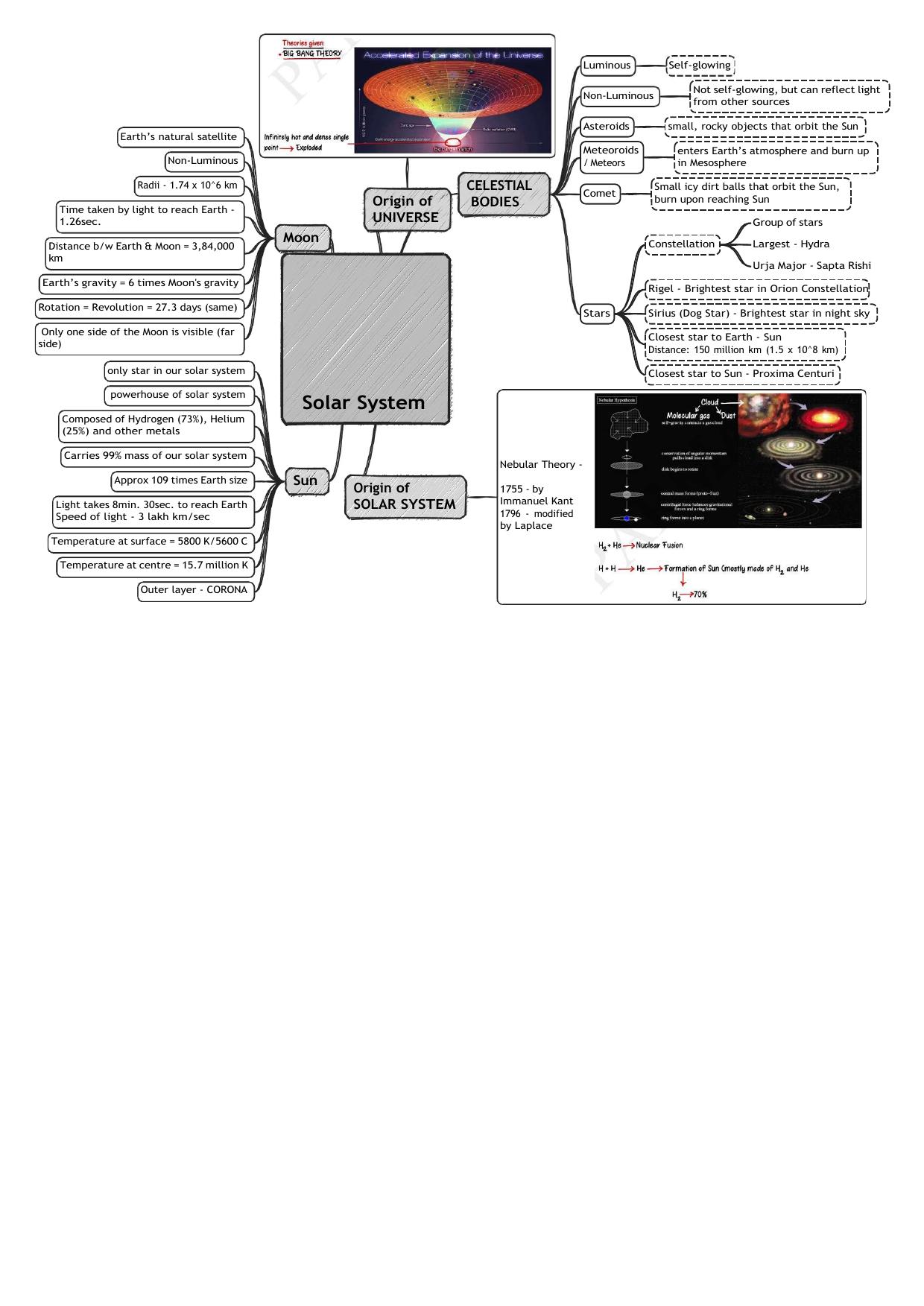 SSC - General Awareness - Geography Flow Charts - 22 PagesNotes · English · Free
 SSC - English Topic Wise - Apr 2022 - Tier 1 - 78 PagesBooks · English · Free
 SSC - Reasoning - Handwritten Notes - 286 PagesNotes · English · Free
 SSC - Maths - Circle Handwritten Formulas Notes - 15 PagesNotes · English · Free
Sources
Exam rules and dates change every cycle: confirm on the official notice before you apply.
- SSC Notice: Junior Engineer Examination, 2026
- SSC Important Notice dated 01.10.2026 (proposed exam dates, including JE 2026 Paper-I)
- SSC Notice: Junior Engineer (Civil, Mechanical and Electrical) Examination, 2025 (for comparison)
- Department of Expenditure OM dated 22.04.2026: DA at 60% from 01.01.2026 (copy circulated by ICMR)
- StaffNews: Cabinet approves 2% DA hike effective from January 2026
- Upstox: No DA hike decision in Union Cabinet meeting (updated 6 October 2026)
- GConnect: 7th CPC HRA office memorandum
- StaffNews: 7th CPC Transport Allowance order
- PFRDA: NPS for Central Government employees
- StaffNews: Cabinet approves Terms of Reference of 8th Central Pay Commission
More exam guides
- General knowledgeGK Questions with Answers (2026) for SSC, Railway and Bank Exams
- SSC CGLSSC CGL Jobs List 2026: Every Post, Department, Pay Level and Vacancy
- SSC CGL and CHSLSSC CGL vs SSC CHSL: Difference in Posts, Salary, Exam and Growth
- SSC CGLSSC CGL Syllabus 2026: Exam Pattern and Full Tier 1 and Tier 2 Syllabus
- SSC GDSSC GD Syllabus 2026 and Exam Pattern: Topics, Marks, Negative Marking and Stages
- SSC CHSLSSC CHSL Syllabus 2026: Tier 1 and Tier 2 Exam Pattern, Topics and Typing Test