SSC CPO Syllabus 2026: New Paper 1 and Paper 2 Exam Pattern, Physical Test and Salary
Updated 10 October 2026 · Facts checked against the sources listed at the end
The SSC CPO syllabus for 2026 has four subjects: General Intelligence and Reasoning, General Knowledge and General Awareness, Quantitative Aptitude, and English Comprehension. All four now appear in both Paper 1 and Paper 2. This guide follows the Staff Selection Commission's notice for the Sub-Inspector in Delhi Police and Central Armed Police Forces Examination, 2026, uploaded on ssc.gov.in on 10 September 2026. That notice changes the exam a lot: Paper 1 is now a 100-question, one-hour test, Paper 2 carries 320 marks across all four subjects, and the final merit list is drawn from Paper 2.
Where things stand on 10 October 2026: applications closed on 30 September, and the form correction window runs from 8 to 10 October 2026. In a notice dated 1 October 2026, SSC proposed 20 to 28 November 2026 for the CPO computer-based exam. The vacancy tables in the 2026 notice add up to 1,871 tentative posts across Delhi Police, the five CAPFs and a new Sub-Inspector (Fire) post in CISF, and every post is in Pay Level 6.
SSC CPO exam pattern 2026: stages, papers and marking
Selection runs in four stages, and the notice makes every one of them compulsory:
- Paper 1, a computer-based test.
- Physical Standard Test (PST) and Physical Endurance Test (PET). These carry no marks; you either qualify or you are out.
- Paper 2, a second computer-based test, open only to those who clear PST and PET.
- Detailed Medical Examination (DME), with a review medical for anyone declared unfit, followed by document verification.
SSC CPO Paper 1 pattern
| Part | Subject | Questions | Marks | Time |
|---|---|---|---|---|
| I | General Intelligence and Reasoning | 25 | 25 | 15 minutes |
| II | General Knowledge and General Awareness | 25 | 25 | 15 minutes |
| III | Quantitative Aptitude | 25 | 25 | 15 minutes |
| IV | English Comprehension | 25 | 25 | 15 minutes |
| Total | Four parts with a sectional timer | 100 | 100 | 1 hour |
SSC CPO Paper 2 pattern
| Part | Subject | Questions | Marks | Time |
|---|---|---|---|---|
| I | General Intelligence and Reasoning | 20 | 40 | 20 minutes |
| II | General Knowledge and General Awareness | 20 | 40 | 20 minutes |
| III | Quantitative Aptitude | 20 | 40 | 20 minutes |
| IV | English Comprehension | 100 | 200 | 1 hour |
| Total | Parts I to III share one hour with a sectional timer; Part IV has its own hour | 160 | 320 | 2 hours |
Paper 1 questions carry 1 mark each and a wrong answer costs 0.25. In Paper 2 every question is worth 2 marks and a wrong answer costs 0.50. In both papers, then, a wrong answer wipes out a quarter of what a right answer earns. The notice provides Hindi and English versions for the reasoning, GK and quant parts of both papers. Scores from different shifts are normalised.
The minimum qualifying marks in each paper, counted without NCC bonus, are 30% for UR candidates, 25% for OBC and EWS, and 20% for all other categories. These are floors, not cut-offs. SSC fixes the real cut-offs after each stage, and for Paper 1 it may set a separate cut-off for each part.
NCC certificate holders get a bonus added to their normalised score in each paper: 5% of that paper's maximum marks for a C certificate, 3% for B and 2% for A. On Paper 1's 100 marks, that works out to 5, 3 or 2 marks.
Merit now comes from Paper 2. Para 16.8 of the 2026 notice says final selection and the allotment of post and force depend on Paper 2 performance (with any NCC bonus) and the preferences you give. Paper 1 decides who is called for PST and PET. In the 2025 notice, both papers counted.
What changed from the SSC CPO 2025 pattern
Many pages that rank for this search still describe the 2025 exam. Put the two notices side by side and the differences are hard to miss:
| Item | CPO 2025 notice | CPO 2026 notice |
|---|---|---|
| Paper 1 | 200 questions, 200 marks, 2 hours (30-minute timer per part) | 100 questions, 100 marks, 1 hour (15-minute timer per part) |
| Paper 2 | English language and comprehension only: 200 questions, 200 marks, 2 hours | All four subjects: 160 questions, 320 marks, 2 hours |
| Negative marking | 0.25 per wrong answer in both papers | 0.25 in Paper 1, 0.50 in Paper 2 |
| Final selection based on | Paper 1 and Paper 2 | Paper 2 (Paper 1 is used for shortlisting) |
| Posts | SI in Delhi Police and SI (GD) in CAPFs | Adds Sub-Inspector (Fire) in CISF, for men |
What this means for preparation: reasoning, GK and quant no longer end with Paper 1. You will face them again, at a harder level, after the physical stage. English in Paper 2 now has half as many questions as before but still carries 200 marks, which is well over half of the paper that decides your rank.
SSC CPO syllabus 2026: subject-wise topics
The notice gives a single syllabus for both papers and adds that Paper 2 will be harder than Paper 1. It does not give topic-wise weightage. The only official split is the number of questions in each part, shown in the tables above.
General Intelligence and Reasoning
Expect both verbal and non-verbal questions. The topics the notice names fall into these groups:
- Analogy and classification: semantic, symbolic or number, and figural analogies and classification.
- Series: semantic, number and figural series, and non-verbal series.
- Coding and operations: coding and decoding, numerical and symbolic operations, coding with small and capital letters or numbers, word building.
- Spatial ability: space orientation and visualisation, embedded figures, punched holes, pattern folding and unfolding, figural pattern completion.
- Logic: statement and conclusion, syllogistic reasoning, Venn diagrams, drawing inferences, critical thinking.
- Matching and sorting: indexing, address matching, date and city matching, classifying centre codes and roll numbers.
- Also named: trends, problem solving, analysis, judgement, decision making, visual memory, observation, arithmetical reasoning, emotional intelligence and social intelligence.
General Knowledge and General Awareness
This part checks how aware you are of the world around you and of current events, along with the everyday science any educated person picks up. The notice names India and its neighbouring countries, with history, culture, geography, the economic scene, general polity, the Indian Constitution and scientific research. It is a broad syllabus, so steady daily reading of current affairs plus revision of static GK works better than last-minute cramming.
Quantitative Aptitude
| Area | Topics named in the notice |
|---|---|
| Arithmetic | Whole numbers, decimals, fractions and relationships between numbers; percentage; ratio and proportion; square roots; averages; interest; profit and loss; discount; partnership business; mixture and alligation; time and distance; time and work |
| Algebra | Basic identities of school algebra, elementary surds, graphs of linear equations |
| Geometry | Triangle and its centres; congruence and similarity of triangles; circle, chords, tangents and angles subtended by chords; common tangents to two or more circles |
| Mensuration | Triangle, quadrilaterals, regular polygons and circle; right prism, right circular cone and cylinder, sphere, hemisphere, rectangular parallelepiped, regular right pyramid with a triangular or square base |
| Trigonometry | Trigonometric ratios, degree and radian measure, standard identities, complementary angles, heights and distances |
| Data interpretation | Histogram, frequency polygon, bar diagram and pie chart |
This is the same topic list SSC gives for CGL Tier 1 quant, so any CGL quant material you already have fits CPO as well.
English Comprehension
The English part tests how well you understand and use the language. Topics named: error spotting, fill in the blanks (verbs, prepositions, articles and so on), vocabulary, spellings, grammar, sentence structure, synonyms, antonyms, sentence completion, phrases and idioms, and reading comprehension.
English is light in Paper 1, with 25 of 100 marks, and heavy in Paper 2, with 200 of 320 marks. Since Paper 2 decides your rank, English deserves the largest share of your study time.
SSC CPO physical test: PST and PET standards
Candidates shortlisted on Paper 1 are called for the physical stage. Ex-servicemen do not have to run the PET but still go through the PST.
Height and chest (PST) for SI in Delhi Police and CAPFs
| Category | Height | Chest |
|---|---|---|
| Men, general | 170 cm | 80 cm / 85 cm |
| Men from the hill areas of Garhwal, Kumaon and Himachal Pradesh, Dogras, Marathas, Kashmir Valley, Leh and Ladakh, North-Eastern States and Sikkim | 165 cm | 80 cm / 85 cm |
| Gorkha men | 165 cm in Delhi Police; 157 cm in CAPFs | 80 cm / 85 cm |
| Scheduled Tribe men | 162.5 cm | 77 cm / 82 cm |
| Scheduled Tribe men of North-Eastern States (CAPFs) | 157 cm | 77 cm / 82 cm |
| Women, general | 157 cm | Not required |
| Women from the hill areas and groups above, including Gorkhas | 155 cm | Not required |
| Scheduled Tribe women | 154 cm | Not required |
| Category | Height | Chest |
|---|---|---|
| General | 170 cm | 81 cm / 86 cm |
| Hill areas and groups listed in the notice, including Gorkhas and Sikkimese | 165 cm | 81 cm / 86 cm |
| Scheduled Tribes, including Mizos and Nagas | 162.5 cm | 77 cm / 82 cm |
Weight has to be in proportion to height. The lower height or chest standard for hill-area and tribal candidates is given only if you bring the certificate in the format the notice prescribes, issued by the competent authority of your home district. If you are measured short, you can appeal to the appellate authority at the ground, and its decision is final.
Physical Endurance Test (PET)
| Event | Men | Women |
|---|---|---|
| 100 metre race | 16 seconds | 18 seconds |
| Longer race | 1.6 km in 6.5 minutes | 800 m in 4 minutes |
| Long jump (3 chances) | 3.65 m | 2.7 m |
| High jump (3 chances) | 1.2 m | 0.9 m |
| Shot put, 16 lbs (3 chances) | 4.5 m | Not included |
Men who want Delhi Police must hold a valid driving licence for both motorcycle and car (LMV) on the date of the physical test. A man without it is considered only for CAPF posts.
SSC CPO medical standards
Only candidates who qualify in Paper 2 are sent for the medical. The notice sets these standards for all posts:
- Eyesight without glasses or corrective surgery of any kind: near vision N6 in the better eye and N9 in the worse eye; distant vision 6/6 in the better eye and 6/9 in the worse eye. For a right-handed person, the right eye counts as the better eye.
- No knock knees, flat feet, varicose veins or squint, and high colour vision.
- Good mental and physical health, with no defect likely to get in the way of duty.
Anyone found unfit at the DME gets a review medical, normally the next day, and that board's decision cannot be appealed. Two more rules are worth knowing early. Tattoos are allowed only within limits: religious symbols or names, on the inner left forearm or the back of the hand, and smaller than a quarter of that part of the body. And once selected, SIs must pass seven obstacle events in training, among them the Tarzan swing, monkey crawl and vertical rope, or they may not be kept in the force.
SSC CPO salary: pay level and basic pay
All three posts in the 2026 notice are in Level 6 of the 7th Pay Commission pay matrix, Rs 35,400 to Rs 1,12,400. A new Sub-Inspector therefore starts on a basic pay of Rs 35,400.
| Post | Pay level | Pay range | Classification |
|---|---|---|---|
| Sub-Inspector (GD) in CAPFs: CRPF, BSF, ITBP, CISF, SSB | Level 6 | Rs 35,400 to Rs 1,12,400 | Group B, non-gazetted, non-ministerial |
| Sub-Inspector (Executive) in Delhi Police, men and women | Level 6 | Rs 35,400 to Rs 1,12,400 | Group C, as classified by Delhi Police |
| Sub-Inspector (Fire) in CISF, men | Level 6 | Rs 35,400 to Rs 1,12,400 | Group B, non-gazetted, non-ministerial |
On top of basic pay come Dearness Allowance (DA), which is 60% of basic from 1 January 2026 under the Finance Ministry's order of 22 April 2026; House Rent Allowance (HRA), 30%, 20% or 10% of basic in X, Y and Z class cities; and Transport Allowance (TA), Rs 3,600 plus DA in the listed bigger cities such as Delhi and Rs 1,800 plus DA elsewhere.
| Component | Posted in Delhi (X class, listed city) | Posted in a Z class town |
|---|---|---|
| Basic pay | Rs 35,400 | Rs 35,400 |
| DA at 60% | Rs 21,240 | Rs 21,240 |
| HRA | Rs 10,620 (30%) | Rs 3,540 (10%) |
| TA including DA | Rs 5,760 | Rs 2,880 |
| Approximate gross per month | Rs 73,020 | Rs 63,060 |
This is our own approximate calculation, not an SSC figure, and it is before deductions such as pension contribution and income tax. Allowances linked to police and armed police duty, and the effect of government housing on HRA, are left out because the SSC notice does not set them. The DA increase due from July 2026 had not been announced when we checked in early October 2026.
The 8th Central Pay Commission received its terms of reference in October 2025 and has 18 months from its constitution to report. Until its recommendations are accepted and notified, the 7th Pay Commission figures above are the ones that apply.
Who can apply: age and qualification in brief
| Post | Age | Qualification |
|---|---|---|
| SI in Delhi Police and SI (GD) in CAPFs | 20 to 25 years (born between 2 August 2001 and 1 August 2006) | Bachelor's degree from a recognised university |
| SI (Fire) in CISF | 18 to 30 years (born between 2 August 1996 and 1 August 2008) | B.Sc. with Physics, Chemistry and Maths, or Class 10 plus a three-year diploma in Mechanical, Civil, Electrical, Automobile, Chemical, Mining, Aeronautical or Telecommunication Engineering |
The upper age limit goes up by 5 years for SC and ST candidates and by 3 years for OBC candidates. The notice lists further relaxations for ex-servicemen and some other groups. Final-year students could apply if they hold the degree by the closing date of applications.
SSC CPO 2026 vacancies
| Post | Tentative vacancies |
|---|---|
| SI (Executive) in Delhi Police, men | 205 |
| SI (Executive) in Delhi Police, women | 112 |
| SI (GD) in CAPFs: CRPF 254, BSF 457, ITBP 187, CISF 250, SSB 172 | 1,320 (1,173 men, 147 women) |
| SI (Fire) in CISF, men | 234 |
| Total | 1,871 |
SSC does not divide these vacancies by state or zone, and SIs selected for the CAPFs can be posted anywhere in India. Vacancy numbers in a notice are tentative and can change before the final result.
How to prepare for the new SSC CPO pattern
- Train for speed in Paper 1. Each part gives you 25 questions in 15 minutes, and the timer moves you on. Practise in timed 15-minute blocks, one subject at a time.
- Start running now, not after the Paper 1 result. PET sits between the two papers, so your physical training has to run alongside your written preparation.
- Give English the biggest share of time. It is 200 of Paper 2's 320 marks, and Paper 2 decides your rank.
- Respect the negative marking. A wrong answer costs a quarter of a right one, so guess only when you can rule out at least two options.
- Keep GK going all the way to Paper 2. It is tested again there at a harder level.
Practising with others helps with the speed this pattern demands. On Sikhami you can play quick quiz battles in reasoning, GK and English against other aspirants, read free notes shared by learners, and join live voice study rooms to keep a fixed daily routine.
Frequently asked questions
What is the syllabus of SSC CPO 2026?
SSC CPO 2026 tests four subjects in both papers: General Intelligence and Reasoning, General Knowledge and General Awareness, Quantitative Aptitude, and English Comprehension. The notice uses one syllabus for both papers and says Paper 2 will be harder. Paper 1 has 100 questions in one hour; Paper 2 has 160 questions for 320 marks in two hours.
Is there negative marking in SSC CPO?
Yes. Under the 2026 notice, each wrong answer costs 0.25 marks in Paper 1, where questions carry 1 mark, and 0.50 marks in Paper 2, where questions carry 2 marks. In both papers a wrong answer cancels a quarter of a right one.
What is the salary of an SSC CPO Sub-Inspector?
All CPO posts are in Pay Level 6, Rs 35,400 to Rs 1,12,400, so basic pay starts at Rs 35,400. With DA at 60%, 30% HRA and TA in Delhi, our approximate calculation gives about Rs 73,020 a month before deductions. Any allowances linked to police or CAPF duty are not included in that figure.
What height is required for SSC CPO?
For SI in Delhi Police and the CAPFs, general men need 170 cm with a chest of 80 cm (85 cm expanded), and general women need 157 cm. Candidates from listed hill areas and Scheduled Tribes get lower standards, down to 157 cm for some men and 154 cm for ST women, if they produce the prescribed certificate.
Does Paper 1 count in the SSC CPO 2026 final merit?
No. Para 16.8 of the 2026 notice bases final selection and allotment on Paper 2 (plus any NCC bonus) and your preferences. Paper 1 decides who is called for PST and PET, so you still need a strong score in it. In 2025, both papers counted.
When is the SSC CPO 2026 exam?
SSC's notice dated 1 October 2026 proposes 20 to 28 November 2026 for the CPO computer-based exam. Paper 2 comes after PST and PET, and its dates will be announced later on ssc.gov.in. The notice says admission certificates can be downloaded from the SSC website 2 to 3 days before the exam.
Notes on Sikhami for Police exams
 SSC - Maths - Strategy & Practice Book - With Detailed Solutions - 1307 PagesBooks · English · Free
 SSC - Reasoning - Critical Reasoning Made Simple - 98 PagesBooks · English · Free
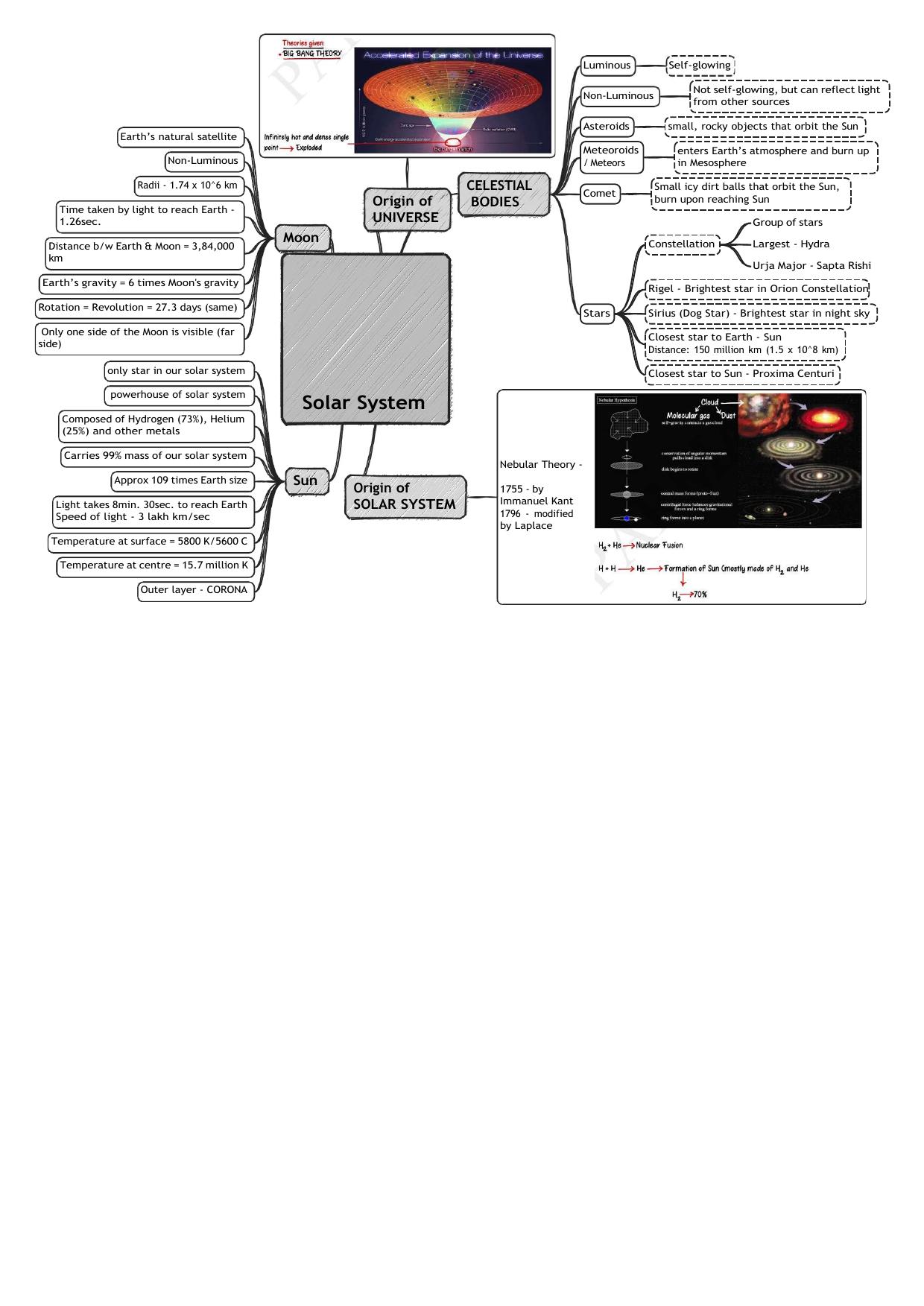 SSC - General Awareness - Geography Flow Charts - 22 PagesNotes · English · Free
 SSC - English Topic Wise - Apr 2022 - Tier 1 - 78 PagesBooks · English · Free
 SSC - Reasoning - Handwritten Notes - 286 PagesNotes · English · Free
 SSC - Maths - Circle Handwritten Formulas Notes - 15 PagesNotes · English · Free
Sources
Exam rules and dates change every cycle: confirm on the official notice before you apply.
- SSC Notice: Sub-Inspector in Delhi Police and Central Armed Police Forces Examination, 2026
- SSC Important Notice dated 01.10.2026 (proposed exam dates, including SI in Delhi Police and CAPFs 2026)
- SSC Notice: Sub-Inspector in Delhi Police and Central Armed Police Forces Examination, 2025 (for comparison)
- SSC Notice: Combined Graduate Level Examination, 2026 (quant syllabus comparison)
- Department of Expenditure OM dated 22.04.2026: DA at 60% from 01.01.2026 (copy circulated by ICMR)
- StaffNews: Cabinet approves 2% DA hike effective from January 2026
- Upstox: No DA hike decision in Union Cabinet meeting (updated 6 October 2026)
- GConnect: 7th CPC HRA office memorandum
- StaffNews: 7th CPC Transport Allowance order
- StaffNews: Cabinet approves Terms of Reference of 8th Central Pay Commission
More exam guides
- SSC CGLSSC CGL Maths Syllabus 2026: Tier 1 and Tier 2 Topics, Marks and Study Order
- SSC CGLSSC CGL Quantitative Aptitude Notes: Free Formulas and Worked Examples
- General knowledgeGK Questions with Answers (2026) for SSC, Railway and Bank Exams
- SSC CGLBest Books for SSC CGL Preparation 2026: Subject-wise List and How to Use Them
- SSC CGLSSC CGL Syllabus 2026: Exam Pattern and Full Tier 1 and Tier 2 Syllabus
- SSC GDSSC GD Syllabus 2026 and Exam Pattern: Topics, Marks, Negative Marking and Stages