SSC CGL Maths Syllabus 2026: Tier 1 and Tier 2 Topics, Marks and Study Order
Updated 10 October 2026 · Facts checked against the sources listed at the end
This page sets out the SSC CGL maths syllabus as the Staff Selection Commission lists it in its notice for the Combined Graduate Level Examination 2026, uploaded on ssc.gov.in on 21 May 2026. It covers Quantitative Aptitude in Tier 1, Mathematical Abilities in Tier 2, the questions and marks each one carries, and a sensible order in which to study the topics.
Where things stand on 10 October 2026: SSC has scheduled the CGL 2026 Tier 1 exam from 30 September to 30 October 2026, and the notice gives December 2026 as the tentative month for Tier 2. Schedules can change, so check the notice board on ssc.gov.in before you fix your revision plan.
SSC CGL maths at a glance: questions, marks and time
Maths appears in both tiers, but its weight and marking change between them. Tier 1 is a screening test: its marks decide who moves on to Tier 2. The final merit list is prepared from Tier 2 marks only.
| Stage | Maths section | Questions | Marks | Time | Wrong answer |
|---|---|---|---|---|---|
| Tier 1 | Quantitative Aptitude | 25 | 50 (2 per question) | 15-minute sectional timer inside the 1-hour paper | minus 0.50 |
| Tier 2, Paper I, Section I | Part A: Mathematical Abilities | 30 | 90 (3 per question) | 30-minute sectional timer inside the 1-hour Section I | minus 1 |
| Tier 2, Paper II (only for JSO and Statistical Investigator Grade II) | Statistics | 100 | 200 (2 per question) | 2 hours | minus 0.50 |
In Tier 2, Mathematical Abilities shares Section I with Reasoning and General Intelligence, which also has 30 questions. Together the two parts carry 180 marks, and you must clear every section of Paper I separately.
The notice also fixes minimum qualifying marks for Tier 1 and for Sections I, II and III of Tier 2 Paper I: 30% for UR, 25% for OBC and EWS, and 20% for all other categories. These are floors, not cut-offs. Who actually moves ahead depends on the category-wise cut-offs SSC sets after each exam.
The notice says Tier 1 Quantitative Aptitude questions are set at 10th standard level, while the other Tier 1 sections are pitched at graduation level. Most of what you need is school maths, tested for speed and accuracy.
Tier 1 Quantitative Aptitude syllabus (official topics)
The notice lists the Tier 1 topics in one long paragraph. Grouped by area, they look like this.
| Area | Topics named in the notice |
|---|---|
| Number sense and arithmetic | Whole numbers, decimals, fractions and relationships between numbers; percentage; ratio and proportion; square roots; averages; interest; profit and loss; discount; partnership business; mixture and alligation; time and distance; time and work |
| Algebra | Basic algebraic identities of school algebra, elementary surds, graphs of linear equations |
| Geometry | Triangle and its various centres; congruence and similarity of triangles; circle and its chords, tangents and angles subtended by chords; common tangents to two or more circles |
| Mensuration | Triangle, quadrilaterals, regular polygons and circle; right prism, right circular cone, right circular cylinder, sphere, hemisphere, rectangular parallelepiped (cuboid), regular right pyramid with a triangular or square base |
| Trigonometry | Trigonometric ratios, degree and radian measures, standard identities, complementary angles, heights and distances |
| Data interpretation | Histogram, frequency polygon, bar diagram and pie chart |
Tier 2 Mathematical Abilities syllabus
For Tier 2, the notice arranges the same ground under seven headings and adds a short statistics and probability unit.
- Number systems: computation of whole numbers, decimals and fractions; relationships between numbers.
- Fundamental arithmetical operations: percentages, ratio and proportion, square roots, averages, simple and compound interest, profit and loss, discount, partnership business, mixture and alligation, time and distance, time and work.
- Algebra: basic identities of school algebra, elementary surds (simple problems) and graphs of linear equations.
- Geometry: elementary figures and facts, the centres of a triangle, congruence and similarity, and circles with their chords, tangents, angles subtended by chords and common tangents.
- Mensuration: the same plane figures and solids as Tier 1, from triangles and regular polygons to cones, spheres, hemispheres, cuboids and right pyramids.
- Trigonometry: trigonometric ratios, complementary angles, heights and distances (simple problems only) and standard identities such as sin²θ + cos²θ = 1.
- Statistics and probability: tables and graphs (histogram, frequency polygon, bar diagram, pie chart); mean, median, mode and standard deviation; calculation of simple probabilities.
What changes from Tier 1 to Tier 2
- New material: mean, median, mode, standard deviation and simple probability appear only in the Tier 2 list.
- Higher stakes: each Tier 2 maths question is worth 3 marks and a wrong answer costs 1 mark, against 2 marks and 0.50 in Tier 1. A guess that goes wrong hurts twice as much.
- Time per question: Tier 1 gives 25 questions in a 15-minute window, about 36 seconds each. Tier 2 gives 30 questions in 30 minutes, about a minute each, so expect questions that need more working.
- Same topic names, more depth: practise multi-step problems in geometry, algebra and data interpretation, where one question often combines two ideas.
Arithmetic vs advanced maths: how the syllabus splits
Students and coaching material usually divide SSC maths into arithmetic and advanced maths. The notice does not use these labels, but they are a handy way to plan, because the two halves need different kinds of practice.
| Part | Topics | What it rewards |
|---|---|---|
| Arithmetic | Number system, simplification, square roots, percentage, profit, loss and discount, simple and compound interest, ratio and partnership, mixture and alligation, averages, time and work, time and distance | Quick mental calculation and spotting the question type at once |
| Advanced maths | Algebra (identities, surds, linear graphs), geometry, mensuration, trigonometry | Knowing formulas and properties by heart, then applying them in a few lines |
| Data and statistics | Bar, pie, histogram and frequency polygon questions; in Tier 2 also mean, median, mode, standard deviation and probability | Careful reading and fast approximation |
SSC advance maths syllabus in detail
- Algebra: identities for (a+b)², (a−b)², a²−b², (a+b)³, a³+b³ and a³+b³+c³−3abc; expressions such as x + 1/x; simplifying surds; reading graphs of linear equations, including where a line meets the axes.
- Geometry: centroid, incentre, circumcentre and orthocentre; congruence rules and similarity; chords, tangents, angles in the same segment, cyclic quadrilaterals and common tangents of two circles; properties of polygons.
- Mensuration: areas and perimeters of triangles, quadrilaterals, regular polygons and circles; volumes and surface areas of prisms, cylinders, cones, spheres, hemispheres, cuboids and pyramids.
- Trigonometry: ratios and their standard values, identities, complementary angles, degree and radian conversion, and heights and distances.
SSC CGL maths topic-wise weightage: what is actually known
SSC does not publish a topic-wise weightage for maths. The only official numbers are the section totals in the first table. The computer-based exam runs in several shifts, each with its own question paper (SSC normalises scores across shifts), so the topic mix is not fixed. Treat any weightage chart you find online as a rough guide built from candidates' memories, however confident it looks.
A more reliable way is to build your own picture from past papers. SSC places tentative answer keys on its website after each exam, and chapter-wise solved-paper books collect old questions by topic.
- Collect the most recent CGL papers you can, keeping Tier 1 and Tier 2 separate.
- Tag every maths question with one topic from the official list.
- Count the tags. Topics that turn up in nearly every paper go to the top of your revision list.
- Redo the count from your own mock tests now and then, so your plan follows your weak areas and not just the exam's averages.
Topic-wise preparation order
This order builds each topic on the one before it. Percentages feed profit and loss, interest and data interpretation. Ratio feeds partnership, mixtures, work and speed. Geometry feeds mensuration and trigonometry.
- Calculation base: tables, squares and cubes, fractions as percentages, simplification and the number system (divisibility, HCF and LCM, remainders).
- Percentage, then profit, loss and discount, then simple and compound interest.
- Ratio and proportion, partnership, averages, and mixture and alligation.
- Time and work (with pipes and cisterns), then time, speed and distance (with trains and boats).
- Algebra: identities first, then surds and graphs of linear equations.
- Geometry: triangles and their centres, congruence and similarity, then circles and tangents, then polygons.
- Mensuration: plane figures first, then solids.
- Trigonometry: standard values, identities and complementary angles, then heights and distances and radian measure.
- Data interpretation, and for Tier 2, mean, median, mode, standard deviation and probability.
- Full-length timed mocks and previous-year papers, with a written log of every mistake.
If your exam is close, do not start every topic from zero. Polish the arithmetic you already know, then pick the advanced topics where a handful of formulas unlocks many questions, such as trigonometric values and mensuration formulas.
Free notes on Sikhami cover many of these topics, and a quiz battle there is a quick way to drill one topic against other learners.
SSC CGL math syllabus PDF: use the official notice
You do not need a third-party PDF. The syllabus is part of the official CGL 2026 notice on ssc.gov.in. Paragraph 13.10 of the notice has the Tier 1 syllabus, and paragraph 13.11 has the Tier 2 syllabus, including the Statistics paper and the Finance and Economics paper.
Files forwarded on messaging groups are often from older years, when the exam pattern was different. The official notice is the safest copy, and SSC posts any changes on the same notice board.
Where to find it: ssc.gov.in, Notice Board, the Combined Graduate Level Examination 2026 notice uploaded on 21 May 2026. Read the Scheme of Examination and Indicative Syllabus parts.
Tier 2 Statistics paper (Paper II)
Only candidates shortlisted for Junior Statistical Officer and Statistical Investigator Grade II sit Paper II. It is a separate 2-hour, 100-question paper and goes far deeper than the statistics inside Mathematical Abilities. The notice lists twelve units:
- Collection, classification and presentation of statistical data
- Measures of central tendency, with quartiles, deciles and percentiles
- Measures of dispersion
- Moments, skewness and kurtosis
- Correlation and regression
- Probability theory
- Random variables and probability distributions
- Sampling theory
- Statistical inference
- Analysis of variance
- Time series analysis
- Index numbers
Frequently asked questions
How many maths questions are there in SSC CGL?
In the CGL 2026 scheme, Tier 1 has 25 Quantitative Aptitude questions worth 50 marks. Tier 2 Paper I has 30 Mathematical Abilities questions at 3 marks each, so 90 marks. Candidates for the JSO and Statistical Investigator posts also take a separate 100-question Statistics paper.
What is included in the SSC advance maths syllabus?
Advanced maths is an informal label for algebra, geometry, mensuration and trigonometry. The official list covers algebraic identities, surds and linear graphs; the centres of a triangle, congruence, similarity and circle properties; areas and volumes of standard figures and solids; and trigonometric ratios, identities, complementary angles and heights and distances.
Is the Tier 2 maths syllabus different from Tier 1?
It is mostly the same set of topics, with one addition: Tier 2 adds mean, median, mode, standard deviation and simple probability. Tier 2 questions carry 3 marks with a 1-mark penalty for a wrong answer, so accuracy matters more than in Tier 1.
Is there negative marking in SSC CGL maths?
Yes. Under the CGL 2026 notice, a wrong answer costs 0.50 marks in Tier 1 and 1 mark in Tier 2 Paper I. In Paper II (Statistics) the penalty is 0.50 marks per wrong answer.
Where can I download the SSC CGL maths syllabus PDF?
Use the official CGL 2026 notice on ssc.gov.in. The Tier 1 syllabus is in paragraph 13.10 and the Tier 2 syllabus in paragraph 13.11. Avoid copies from unknown sites, which may be from an older year with a different pattern.
Which SSC CGL maths topics should I start with?
Start with calculation basics and percentages, because profit and loss, interest and data interpretation all rest on them. Then move to ratio-based topics, and after that to algebra, geometry, mensuration and trigonometry.
Notes on Sikhami for SSC exams
 SSC - Maths - Strategy & Practice Book - With Detailed Solutions - 1307 PagesBooks · English · Free
 SSC - Reasoning - Critical Reasoning Made Simple - 98 PagesBooks · English · Free
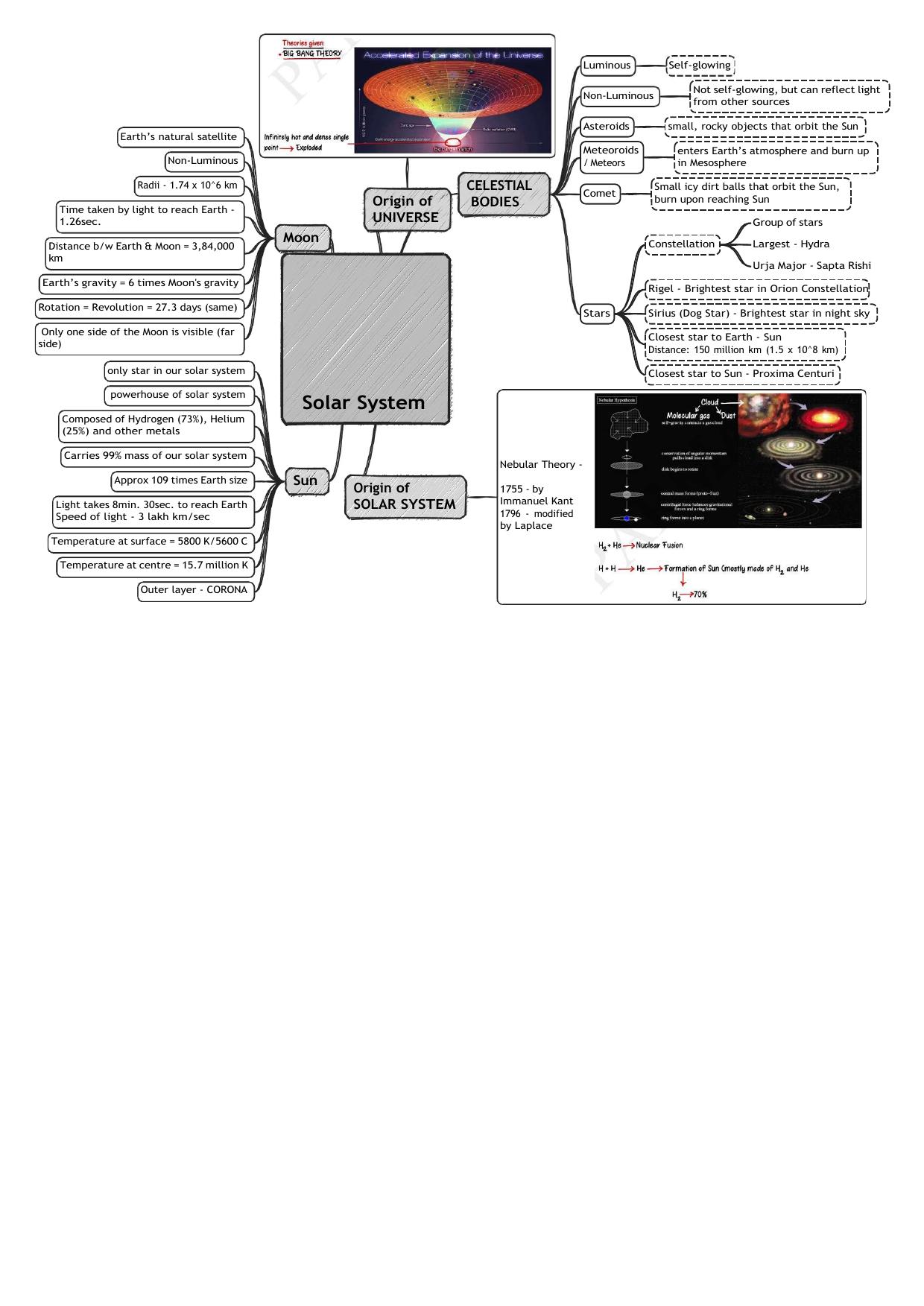 SSC - General Awareness - Geography Flow Charts - 22 PagesNotes · English · Free
 SSC - English Topic Wise - Apr 2022 - Tier 1 - 78 PagesBooks · English · Free
 SSC - Reasoning - Handwritten Notes - 286 PagesNotes · English · Free
 SSC - Maths - Circle Handwritten Formulas Notes - 15 PagesNotes · English · Free
Sources
Exam rules and dates change every cycle: confirm on the official notice before you apply.
More exam guides
- SSC CHSLSSC CHSL Jobs 2026: Posts List, Salary, Departments and Promotions
- SSC CGLSSC CGL Cut Off: Previous Year Tier 1 Cut-offs (2021 to 2025) and CGL 2026 Status
- SSC CGLSSC CGL Jobs List 2026: Every Post, Department, Pay Level and Vacancy
- SSC CGL and CHSLSSC CGL vs SSC CHSL: Difference in Posts, Salary, Exam and Growth
- SSC CGLSSC CGL Eligibility 2026: Age Limit, Qualification, Attempts and Height Rules
- SSC CGLSSC CGL Admit Card 2026: Download Steps, City Intimation Slip and What to Carry